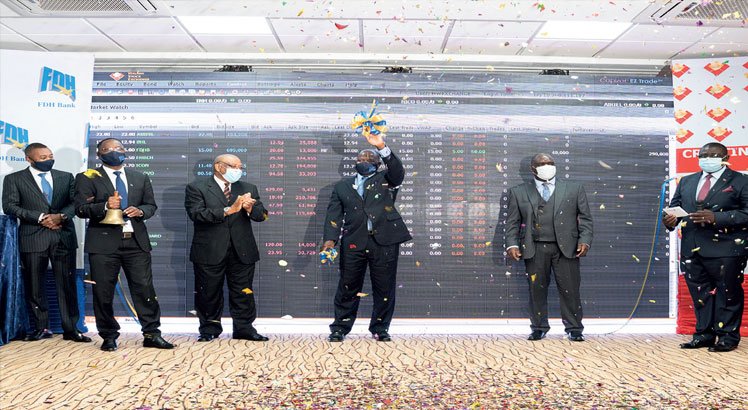
The 16-counter Malawi Stock Exchange (MSE) closes 2025 tomorrow on a high note, with the overall market measure more than doubling to 619 000 points and market capitalisation hitting K33 trillion. On paper, this was a remarkable year for one of the smallest stock exchanges in Africa. But beneath the rally lies a more complicated reality driven by high inflation, deep currency instability and thin liquidity that raises fundamental questions about what the numbers actually represent.
The MSE opened the year steadily, but gathered pace through the second quarter, then recorded explosive growth in the third. Banking sector stocks led the rally supported by strong earnings, high dividend expectations and increased institutional allocations. The Malawi All Share Index (Masi), the overall measure of market performance, rose from 280 000 points in January to about 385 000 in June, before rocketing past 535 000 in September and then 619 000 in December.
In an interview, Market analyst and investor Benedicto Nkhoma said the surge reflected both fundamentals and market conditions. “Most of the listed companies in the financial sector have performed well above inflation. Increased money supply, stellar half-year results and limited availability of quality assets pushed investors toward equities,” he said.
[paywall]
But inflation-adjusted performance tells a more cautious story. Throughout 2025, inflation hovered between 27 and 31 percent, eroding real purchasing power even as nominal share prices rose. The weak macro-economic environment pushed investors towards stocks not out of confidence in growth, but as a defensive shield against value erosion.
At the same time, the kwacha’s instability worsened. The official exchange rate remained stuck at K1 751 to the dollar, but the parallel market rate climbed to as high as K4 500, giving diaspora investors more kwacha per dollar and making MSE assets appear comparatively cheaper. Nkhoma, a former investment banker, said the premium mattered, adding: “The depreciation in the parallel market could have played a part as some investors from the diaspora changed to have more kwacha to buy ‘cheaper’ assets.” The 2025 rally was highly concentrated.
A handful of heavyweight counters pulled the Masi upward while several others lagged behind. Standard Bank plc, one of the blue-chips, dominated headlines after executing a five-for-one share split in August that reduced its trading price from about K12 000 to K2 140 per share.
[/paywall]
