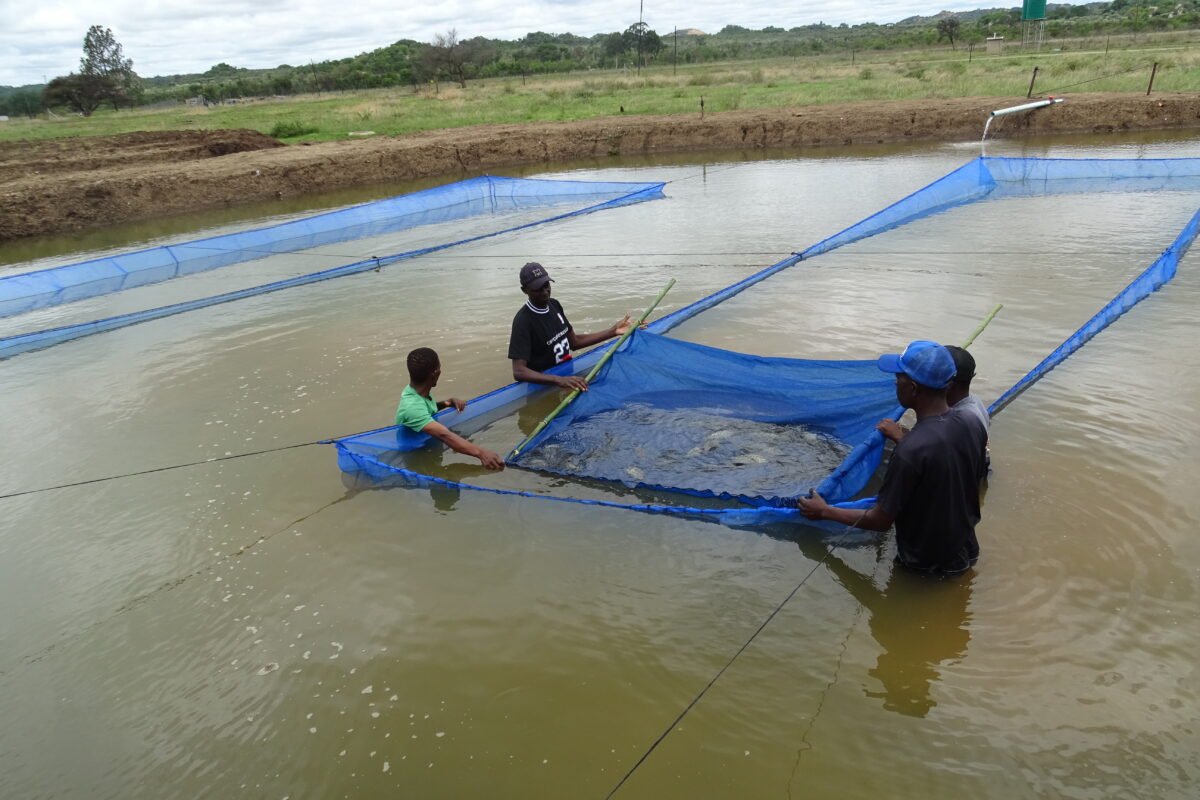
The long-running struggle by fish farmers in Matabeleland and Midlands provinces to access affordable and reliable fingerlings may soon ease following the establishment of a government-led breeding facility at Matopos research centre. For years, small-scale farmers across the region have dug ponds, secured water and mobilised resources but only to wait months for fingerlings that could only be sourced from distant Kariba. As a result, many potential fish breeders were forced to abandon their projects before they even began.
Fish farmers such as Thulani Ncube from Gwanda say the challenges have been discouraging. “We have waited for years for something like this. If the Matopos hatchery delivers as promised, it will completely change our lives because many of us failed to start fish projects simply because fingerlings were too far and too expensive,” said Ncube.
Zimbabwe Fish Producers Association chairperson Garikai Munatsirei said the shortage has been one of the most crippling constraints for farmers in Matabeleland. “Farmers dig their ponds, they fill them with water but they cannot get the fingerlings to put in there. The waiting time is so long,”“And to make matters worse farmers have to go and get them from Kariba which is very far away” said Munatsirei in an interview with CITE.
[paywall]
Munatsirei, whose association represents more than 300,000 members nationwide, revealed that demand for fingerlings has grown rapidly as the government pushes for grassroots empowerment through aquaculture. He said the new hatcheries at Matopos, Makoholi (Masvingo) and Underson (Mashonaland Central) would not solve the problem immediately but would mark a major step toward ensuring reliable and decentralised supply.“When the hatcheries are fully functional in about 12 months’ time, the pattern of fingerlings available to the market will be significantly different in a positive direction,” he said. Speaking at the launch of the hatchery management guidelines in Bulawayo recently, Food and Agriculture Organisation FAO Sub-regional Coordinator for Southern Africa, Dr Patrice Takoukam Talla said the new guidelines and breeding centres would help correct serious weaknesses in the value chain especially in regions like Matabeleland where farmers have been forced to rely on informal or river-sourced breeding stock.
“Zimbabwe has over 10,000 dams with potential for fish production but potential alone is not enough. It must be matched with the right conditions, infrastructure, markets and skills,” said Dr Talla. He warned that the absence of structured breeding programmes has compromised productivity.
“Farmers in their determination to meet demand, have resorted to sourcing genetics from rivers and informal suppliers. These practices compromise both productivity and sustainability,” noted Dr Talla. He added that the new guidelines provide “a practical, science-based framework” to improve fingerling quality while ensuring inclusivity so that “women and youth must not be left behind.”
[/paywall]
