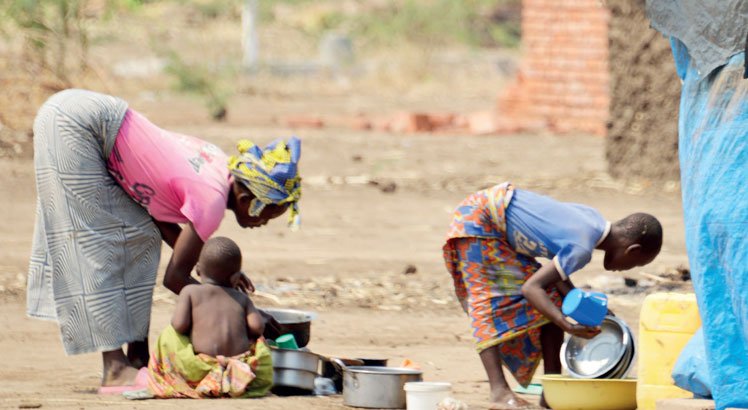
If you ask a Malawian in the street how they are doing, the most likely response will be “choncho, bola moyo [we are barely surviving, but grateful for the gift of life]”. The “choncho” response is a loaded statement as it reflects the reality of the life of many a Malawian household reeling under a heavy economic burden that has wiped out their purchasing power through high taxes, general rise in the cost of living and levies. For those in formal employment, most of them have not had salary increments while those who did the envisaged increase was eaten up by revised rates of Pay As You Earn (Paye) income tax while the remainder goes to value added tax (VAT) now at 17.5 percent from 16.5 percent.
Mzuzu-based academic Albert Harawa, who has been a lecturer at Mzuzu University since 2009, in an interview on Wednesday said that a few years back his household could use K5 000 worth of pre-paid electricity units the whole month. However, he said this time around, the same family requires K100 000 per month for electricity and water besides other needs such as toiletries, transport and food. He said: “What is more worrying is that you are deducted Paye from your salary, then levied from the bank [for electronic transfers], even when buying water and electricity units you pay levy, mobile transactions have levy.
“Our bank accounts have become pockets where we are just receiving and then spending. It’s very difficult to save. There is a real struggle out here and we need to control the prices so that salaries or other money can be meaningful.” In Thekerani, Thyolo, Henry Limited, a primary school teacher with a monthly basic salary of around K310 000, said the situation gives him a headache to plan expenditure.
[paywall]
He said he is deducted at least K42 000 as Paye and when he factors in other deductions and obligations he takes home about K200 000 to cover house rent, school fees for his children, food and other bills subjected to VAT. “I have to send some money to dependants too. Do you think I can save anything?
Even buying clothes has become a luxury! The only cheap thing is maize, otherwise, we are working to survive, not to develop,” he lamented. Centre for Social Concern economic governance officer Agness Nyirongo said at household level, families are increasingly forced into difficult trade-offs limiting expenditure on social services while at broader level, these dynamics are undermining national development.
She said reduced consumer spending weakens demand for goods and services, affecting businesses and slowing economic growth, while small and medium enterprises—often the backbone of local economies—are particularly vulnerable. Economist Greenson Nyirenda said the hardest hit segment of the population is the middle class which is the engine of an economy as it provides employment to the lower income class/informal sector jobs. For Mzuzu based social commentator Isaac Cheke-Ziba, life has become increasingly precarious, compressed, and survival-oriented rather than developmental. “It is a classic case of cost-of-living squeeze, because disposable income is shrinking, savings are nearly impossible and even formally employed individuals are sliding towards working poverty,” he said.
[/paywall]
All Zim News – Bringing you the latest news and updates.
