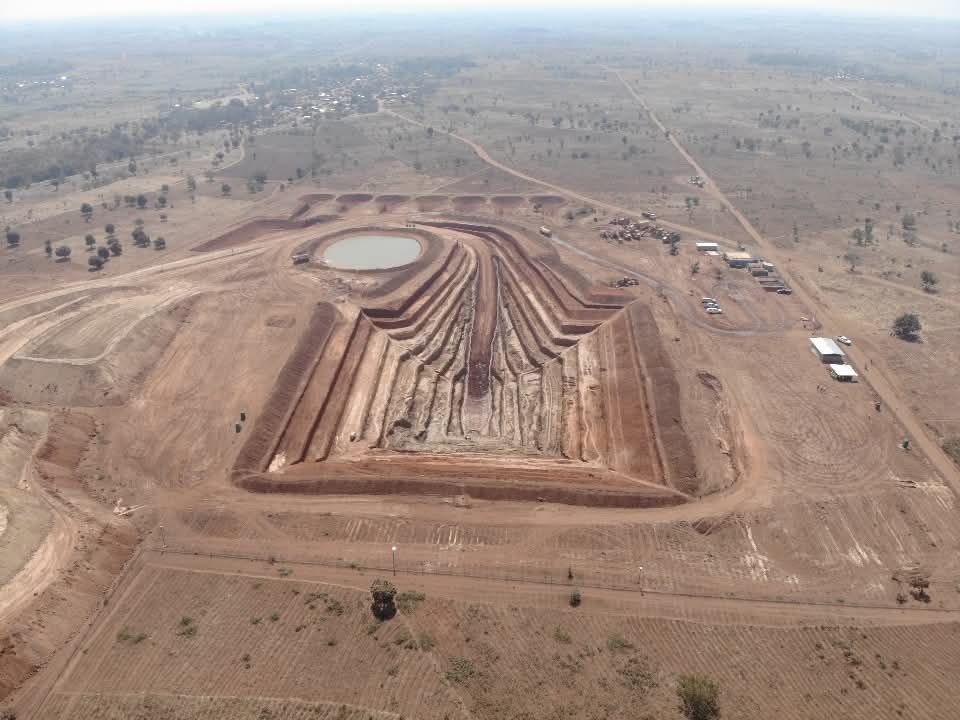
Malawi has signed what government officials are calling a landmark minerals deal with a United States-based trading firm, a move that could position the country within Washington’s strategic supply chain ambitions—but also raises familiar questions about transparency, long-term value and national benefit. The Memorandum of Understanding (MOU), signed at the 2026 Mining Indaba in Cape Town, brings together Sovereign Metals Limited and Traxys North America in relation to the Kasiya rutile-graphite project in Lilongwe. Under the arrangement, Traxys will work toward marketing an initial 40,000 tonnes of graphite per year from the Kasiya project, with volumes expected to increase to 80,000 tonnes annually as production expands.
The graphite would potentially feed into the United States’ strategic critical minerals reserve under a US$12 billion initiative known as Project Vault. The Kasiya project, developed by Sovereign through its Malawi subsidiary, Sovereign Services, is touted as one of the world’s largest natural rutile deposits, alongside significant flake graphite resources. Rutile and graphite are classified as critical minerals by the United States, used in defence systems, aerospace technology, advanced manufacturing and battery production.
Sovereign Metals Managing Director and CEO Frank Eagar described the agreement as a sign of growing international confidence in Malawi’s mineral potential. “Through Kasiya, Malawi has the opportunity to become a key contributor to secure diversified supply chains for the United States and its allies,” he said, adding that the proposed five- to ten-year marketing arrangement would strengthen Malawi–US cooperation in critical minerals development. But while the deal may boost Malawi’s international profile, key details remain unclear.
Read Full Article on Nyasa Times
[paywall]
The MOU outlines marketing intentions rather than binding production or revenue guarantees. There has been no public disclosure of pricing structures, royalty implications, or the projected fiscal returns to Malawi over the lifespan of the arrangement. For a country with a long history of exporting raw materials with limited domestic value addition, the central question is simple: will this deal transform Malawi’s economy—or merely deepen its role as a supplier of unprocessed commodities?
The Kasiya project is located in Lilongwe District, an area where communities are already seeking clarity on land compensation, environmental safeguards and employment prospects. Mining agreements in Malawi have previously faced criticism for weak oversight and limited transparency. Civil society organisations are likely to demand publication of the full terms of the MOU and any future binding contracts, particularly as graphite and rutile are positioned as high-value, strategic minerals in global markets.
There is also the broader geopolitical dimension. There is no doubt that global demand for critical minerals presents an opportunity. Countries with verified reserves are in a stronger bargaining position than they were a decade ago.
But opportunity alone does not guarantee national gain. If managed prudently—with transparent contracts, fair taxation, strong environmental regulation and deliberate policies to encourage local processing—the Kasiya project could help diversify Malawi’s export base and generate meaningful revenue.
[/paywall]
All Zim News – Bringing you the latest news and updates.
