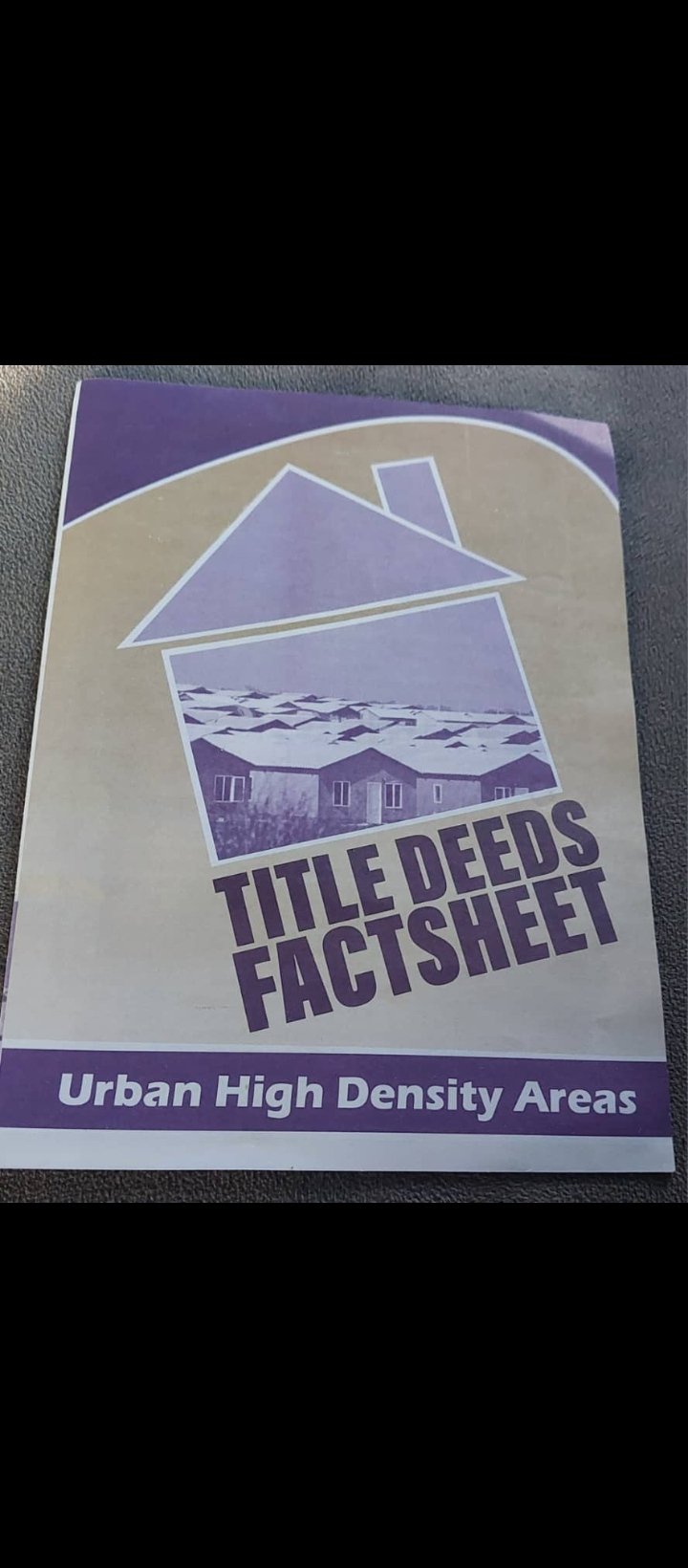
NewsBy Chris MahoveA recent half day forum on integrating Digital Technology for Secure, Safe, Urban, Farm and Rural Property and Land Rights, which was hosted by the Coalition for Market and Liberal Solutions (COMALISO) revealed a worrying reality: majority Zimbabweans don’t own the properties they live on and claim to be theirs!At least 10 million Zimbabwe citizens have no title deeds to their properties and two thirds of the country’s population is rural.Speaking at the forum, which brought together traditional leaders, government officials, conveyancers, residents associations and block chain/digital experts among other stakeholders, Harare Lawyer, Lloyd Mhishi, said property ownership without title deeds was meaningless.“In terms of our laws, ownership is through registration of title deeds. So if you are settling on a piece of land, be it communal or newly resettled, you do not have ownership because it is defined by registration. This is the law inherited from the Roman Dutch law during colonization,” Mhishi said.Mhishi noted, however, that Section 71 of the Constitution of Zimbabwe provided for the right to occupy the land, even where settlers did not have title deeds.Nevertheless, he further explained, government had the right to displace people if the land in questions was required for public purposes.“Let me emphasise that there is a difference between communal land and privately owned land.
Section 71 of the Constitution of Zimbabwe provides for the Right to Occupy and not to own. So the law does not allow for people to be unilaterally evicted to make way for investment projects.“But if the government seeks to get that land for public purposes, land acquisition is permitted. Internationally, land acquisition is not a new phenomenon, it’s not a Zimbabwean concept, “he said.In the US, their laws give the government the power to acquire land for public purposes.Mhishi noted, however, that Section 71 of the Zimbabwe Constitution provided for the procedure to be followed; whether it was communal or privately owned land.“Even in urban areas, if a road is to be constructed where there are developments, that land can be acquired.
But what does section 71 say? If you take land, you will have to compensate with equal value for it. So displacing people who have nowhere else to go without compensation is a violation of the law,” he said.The general populace, he emphasised, should know their rights, including the right to be compensated for land which would have been acquired.Mhishi said because of the prevalence of fake documents in the country, including title deeds, it was important to have digitized title deed.In order to balance the situation, the government, through the Kwangu-Ngokwami Trust, is planning on issuing title deeds to over four million disadvantaged houses in both rural and urban areas and will spend about $25 billion for the project over the next 10 years.And to ensure that rural folk understand the transformational benefits of having digitized title deeds to their land, COMALISO will, starting this weekend, embark on an educative campaign dubbed “Dai Kumusha”.“The Dai Kumusha campaign will help spread the message on the essence of free, independent, individual and wealth creating ownership of all rural and communal land by citizens through digitalized title deeds,” explained COMALISO Director, Rejoice Ngwenya.Issuance of title deeds in rural and communal areas, Ngwenya noted, would see the creation of village industries, create employment for the rural folk, improve productivity, encourage tourism and also encourage natural conservation.Ngwenya said his team would be visiting rural bus termini, growth points, vegetable markets, bars, schools hospitals, clinics and all places where people gathered in rural areas to spread the message on title deeds.Leave a ReplyCancel reply NewsBy Chris MahoveA recent half day forum on integrating Digital Technology for Secure, Safe, Urban, Farm and Rural Property and Land Rights, which was hosted by the Coalition for Market and Liberal Solutions (COMALISO) revealed a worrying reality: majority Zimbabweans don’t own the properties they live on and claim to be theirs!At least 10 million Zimbabwe citizens have no title deeds to their properties and two thirds of the country’s population is rural.Speaking at the forum, which brought together traditional leaders, government officials, conveyancers, residents associations and block chain/digital experts among other stakeholders, Harare Lawyer, Lloyd Mhishi, said property ownership without title deeds was meaningless.“In terms of our laws, ownership is through registration of title deeds.
Read Full Article on ExpressMail Zimbabwe
[paywall]
So displacing people who have nowhere else to go without compensation is a violation of the law,” he said.The general populace, he emphasised, should know their rights, including the right to be compensated for land which would have been acquired.Mhishi said because of the prevalence of fake documents in the country, including title deeds, it was important to have digitized title deed.In order to balance the situation, the government, through the Kwangu-Ngokwami Trust, is planning on issuing title deeds to over four million disadvantaged houses in both rural and urban areas and will spend about $25 billion for the project over the next 10 years.And to ensure that rural folk understand the transformational benefits of having digitized title deeds to their land, COMALISO will, starting this weekend, embark on an educative campaign dubbed “Dai Kumusha”.“The Dai Kumusha campaign will help spread the message on the essence of free, independent, individual and wealth creating ownership of all rural and communal land by citizens through digitalized title deeds,” explained COMALISO Director, Rejoice Ngwenya.Issuance of title deeds in rural and communal areas, Ngwenya noted, would see the creation of village industries, create employment for the rural folk, improve productivity, encourage tourism and also encourage natural conservation.Ngwenya said his team would be visiting rural bus termini, growth points, vegetable markets, bars, schools hospitals, clinics and all places where people gathered in rural areas to spread the message on title deeds. A recent half day forum on integrating Digital Technology for Secure, Safe, Urban, Farm and Rural Property and Land Rights, which was hosted by the Coalition for Market and Liberal Solutions (COMALISO) revealed a worrying reality: majority Zimbabweans don’t own the properties they live on and claim to be theirs! At least 10 million Zimbabwe citizens have no title deeds to their properties and two thirds of the country’s population is rural.
Speaking at the forum, which brought together traditional leaders, government officials, conveyancers, residents associations and block chain/digital experts among other stakeholders, Harare Lawyer, Lloyd Mhishi, said property ownership without title deeds was meaningless. “In terms of our laws, ownership is through registration of title deeds. This is the law inherited from the Roman Dutch law during colonization,” Mhishi said.
Mhishi noted, however, that Section 71 of the Constitution of Zimbabwe provided for the right to occupy the land, even where settlers did not have title deeds. Nevertheless, he further explained, government had the right to displace people if the land in questions was required for public purposes. “Let me emphasise that there is a difference between communal land and privately owned land.
So the law does not allow for people to be unilaterally evicted to make way for investment projects. “But if the government seeks to get that land for public purposes, land acquisition is permitted. Internationally, land acquisition is not a new phenomenon, it’s not a Zimbabwean concept, “he said. In the US, their laws give the government the power to acquire land for public purposes.
[/paywall]
