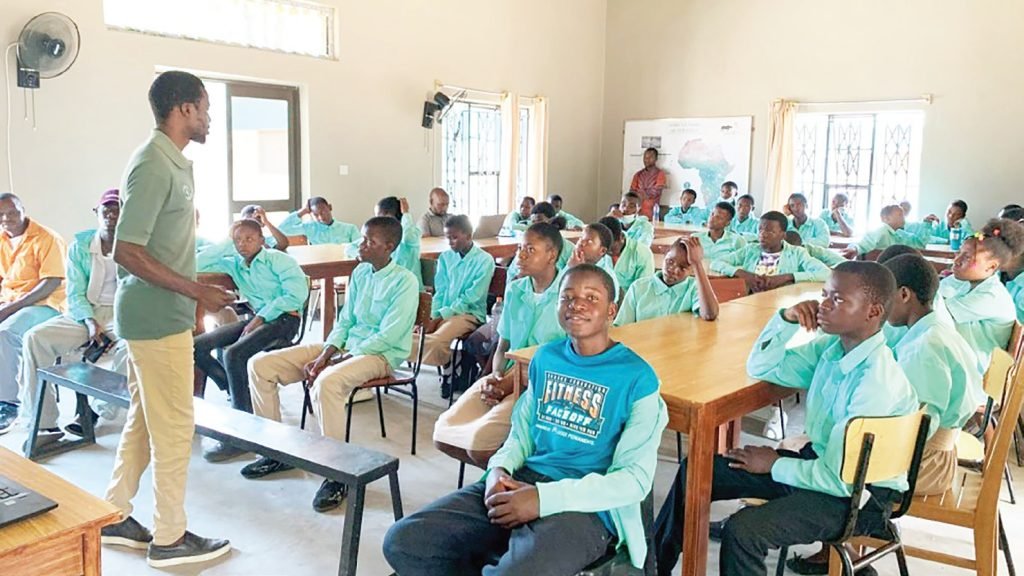
Liwonde National Park’s newly renovated environmental education centre has become an epicentre of sharing knowledge and growing love of nature, especially among children in school. According to the charity dedicated to wildlife conservation, this was not just a renovation, but “a revival of a space dedicated to inspiring the next generation of conservationists” and “a dynamic hub for interactive learning”. The centre delivers environmental education to schoolchildren immersed in camp sessions, communities gathering for discussions and groups engaging in media presentations and workshops.
For visitors, the upgraded facilities have become a focal point for learning and discovery. Its hostels allow students to extend their stay and further connect with Liwonde’s remarkable landscapes and diverse wildlife, which include antelopes, elephants, black rhinos and lions that roam the picturesque wetlands along the banks of the Shire River. Experiencing the park both by day and night deepens children’s understanding of the park’s incredible biodiversity and strengthens their bond with nature from a young age, African Parks says in a statement.
Meanwhile, 4 901 learners visited for the day, with 13 percent receiving sponsorship. These numbers reflect a strong commitment to ensuring that the 113 schools surrounding the park and the communities they serve have access to meaningful environmental education. The nationalpark is surrounded by three districts—achinga, Balaka and Mangochi .
[paywall]
Among the young visitors, students from Namandanje Community Day Secondary School said the learning tour to the park was truly transformative as they got to experience firsthand the postcard beauty of the park complete with improved accommodation and delicious meals. One of them is quoted as having said that these lessons have ignited my ambition and given me the tools to achieve my goals. As a student, I’m deeply thankful for this incredible opportunity.” The centre is the latest addition to a wide range of education support openings in the interiors and surroundings of the parks where African Parks has management partnerships.
Other learning opportunities include scholarships, building schools and literacy programmes, vital in a country where children in rural communities have little access to good education, often due to lack of tuition funds. In addition, environmental education programmes are run and wildlife clubs started in the villages, creating environmental awareness at scale amongst Malawi’s schoolchildren.
[/paywall]
