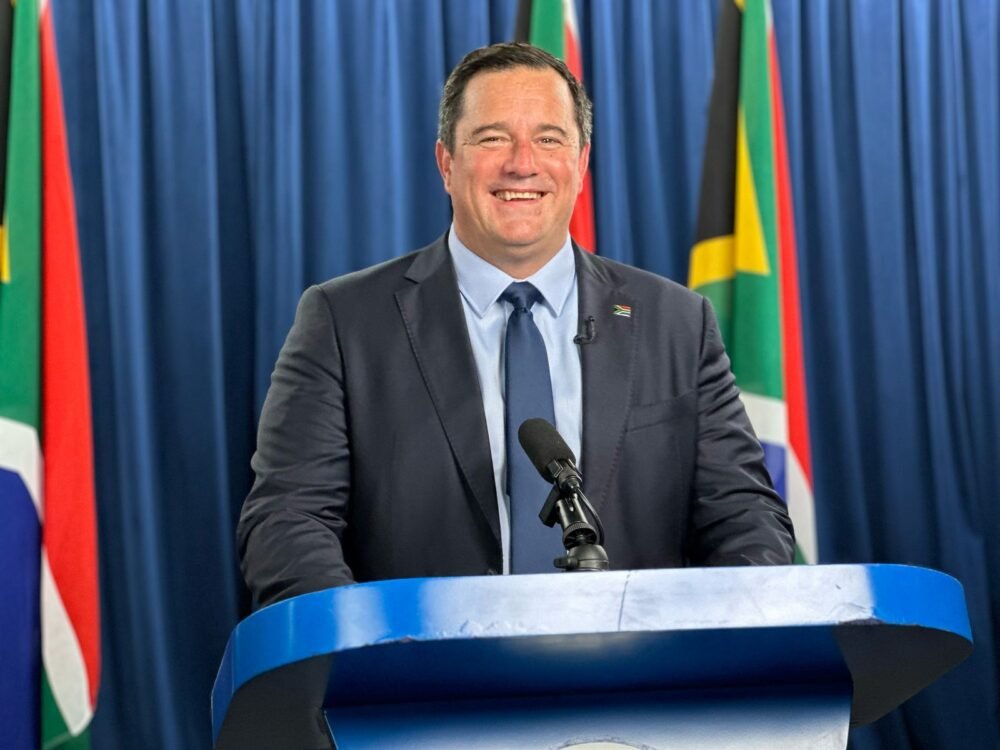
If you had said to most South Africans in 2019 that the Democratic Alliance would partner with the African National Congress in government in 2024 and that in the process it would deliver important and positive change to South Africans, most would have laughed at the prospect. If you had said that the DA, then polling at 16% in the wake of an election setback in 2019 and with its then leader walking off the job, would be the only established party to increase its vote in 2024 and that today it would be polling at 30%, they would probably have thought you had lost your marbles. If you had said that DA members would be sworn in as ministers, deputy ministers, deputy speaker, chairpersons and portfolio committee chairs in the National Assembly and National Council of Provinces, as well as MECs and deputy speaker in KwaZulu-Natal — in addition to retaining outright control of the Western Cape — you would have been accused of over-imbibing the party Kool-Aid.
But this is the reality today. The DA has shifted from the periphery to the centre of governance and has begun to change the way South Africa works. The DA is bringing positive change wherever it governs and it is governing in more and more places in South Africa, including in critical areas of national government.
This is the platform provided by stable leadership, a clear focus on the things that matter to South Africans — growth, jobs, services and security — and a willingness to work with other parties in the fraught business of coalition building and management. Not long ago, it was unthinkable that the leader of the DA would ever walk up the steps to the Union Buildings. For 30 years under democracy, and for many decades before that, the DA and its predecessors fought to one day carry its vision of building an open opportunity society for all into national government.
Read Full Article on Mail & Guardian
[paywall]
With 1.7% of the vote in 1994 and just seven seats in the National Assembly, that moment seemed unimaginable. Instead, 1994’s result was a flashback to the early days of the Progressive Federal Party in 1959 when, for 13 years, its only member of parliament was the redoubtable Helen Suzman. The DA strove for this goal because it was only by gaining access to the levers of national power that it could ever hope to build a more prosperous, fair and successful country.
But to get there called for leadership that would do the hard work of converting the DA from a party of mere opposition into a governing force strong enough to bend the arc of history — away from a SA marked by joblessness, decline and despair and towards economic growth, rising prosperity and renewed hope. Very few people believed the party would ever manage this journey. There were even some in the party who resisted the opportunity to take it into the Government of National Unity (GNU), preferring a confidence-and-supply arrangement, whereby it would support the ANC on crucial votes such as the budget and no-confidence motions to prevent its collapse but would not hold cabinet posts. It was an understandable point of view as the DA had spent its life in opposition and a bold change was on the table.
[/paywall]
All Zim News – Bringing you the latest news and updates.
