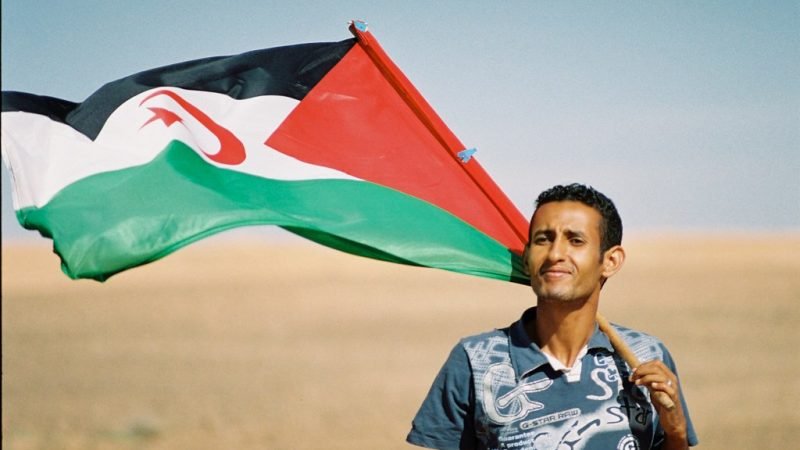
Fifty years after the conflict over Western Sahara began, the Sahrawi experience represents far more than an unresolved political dispute. It is a prolonged human story of displacement, repression, legal limbo and moral endurance — one that continues to test the credibility of international law and the ethical coherence of the global order. This is not an argument on behalf of any political organisation.
It is an examination of a people’s struggle to exist, to be recognised and to retain dignity under conditions that international law itself defines as unfinished decolonisation. Public debate often reduces the Sahrawi cause to a brief period of armed confrontation in the late 20th century. This framing is misleading.
The essence of the Sahrawi struggle has not been military, but civic, legal and human. For half a century, Sahrawis have lived with the consequences of a conflict that never reached resolution: forced displacement, prolonged exile, political repression and the suspension of a promised act of self-determination. Since 1975, tens of thousands of Sahrawis have lived as refugees in camps in south-western Algeria — among the longest-standing refugee situations in the world.
Read Full Article on Mail & Guardian
[paywall]
Entire generations have been born and raised without having seen their homeland. Alongside them exists a broader Sahrawi diaspora across North Africa, Europe and beyond, shaped not by voluntary migration but by the enduring absence of apolitical solution. Within Western Sahara itself, Sahrawis who express political, cultural or civic identity outside officially sanctioned narratives have long faced arrest, surveillance and intimidation.
International human rights organisations have consistently documented arbitrary detention, unfair trials, restrictions on freedom of expression and the criminalisation of peaceful protest. Students, journalists, activists and ordinary civilians have been targeted for acts as simple as raising a flag, participating in a demonstration or asserting a distinct identity. The repression has not been episodic but structural, reinforced by the absence of an independent human rights monitoring mechanism for the territory.
[/paywall]
