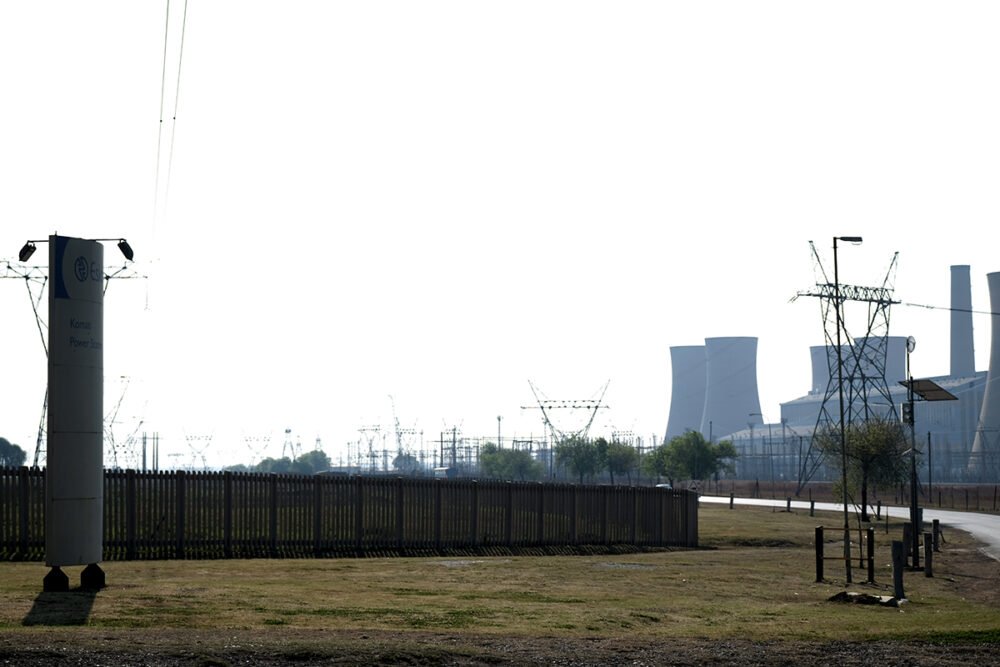
“I’m appealing that please don’t use South Africa as an example on how thejust transitionis being done. That has nothing to do with just transition. We only came to know about it when we couldn’t put food on our table.” These stark words from Malaka George Mpe at last year’s 30th annual UN climate summit (COP30) in Brazil capture the harsh reality facing communities around South Africa’s decommissionedKomati Power Station.
What should have been a model for climate action has become acautionary taleof what happens when communities are excluded from decisions that reshape their lives. When the power station closed its doors in 2022 after 60 years of operation, nobody expected to wake up one day with an evaporated economic value chain. Everything came to an abrupt stop.
For communities that had built their existence on the coal value chain, the closure wasn’tjust about lost jobs; it was about lost futures. “In the middle of all this confusion, we were not aware that this was going to come to us. No proper engagement was done to prepare the community for what was coming.
Read Full Article on Mail & Guardian
[paywall]
We could have prepared people ahead of time. We were left in the dark,” Mpe said. The Komati situation reveals a flaw in South Africa’s approach to the energy transition, critics say.
While civil society organisations celebrated cutting emissions and shutting down power stations, communities bore the brunt of job losses, with no Plan B in place. “Let’s talk about Komati,” said climate activist Errol Mlambo of EarthLife Africa. “We think about a coal power station which took about 60 years to be decommissioned in a community where there are people.
We are having this conversation as if it was a surprise. “When the decision was made, there was no succession plan in place because that’s how decision makers view communities … We are left behind and it seems deliberate because I cannot accept myself as part of civil society after 60 years and on the eve of decommissioning of a power station, people are without jobs.” Mpumalalanga generates 50% of South Africa’s greenhouse gas emissions, with 11 power stations, among them the now-decommissioned Komati. All eyes were on the province to respond to climate change first.
“When we were looking at the just transition, we looked at climate change. We didn’t want to separate the two, because [the] just transition is embedded in climate change,” said Dudu Sibiya from the Mpumalanga provincial government. “At the same time, we were not looking at the community level.” This brought in a social employment fund through the Industrial Development Corporation, which absorbed about 30 young people into a one-year programme, providing monthly stipends.
[/paywall]
All Zim News – Bringing you the latest news and updates.
