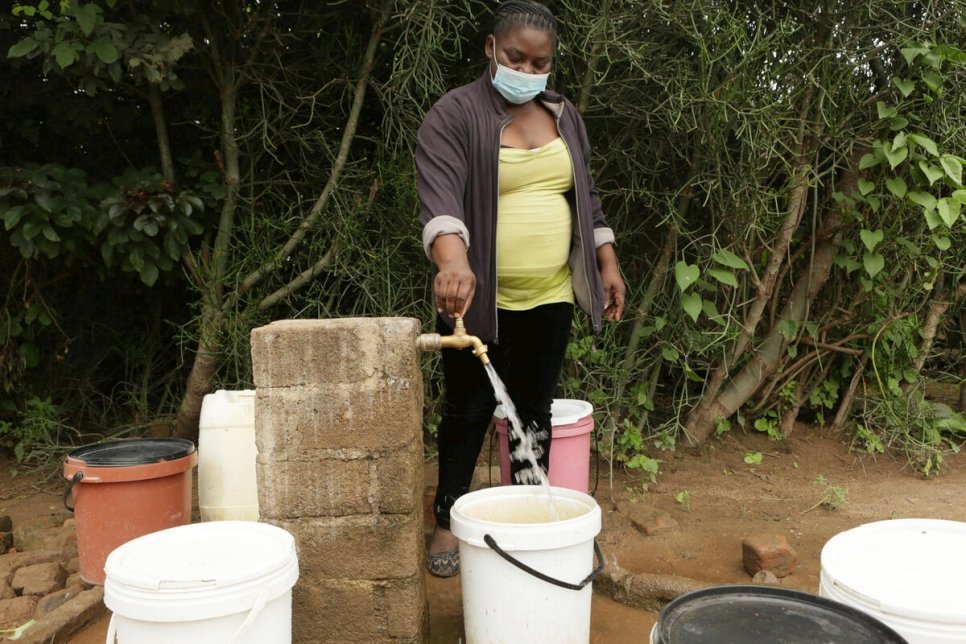
Josephine Mbayo faced many difficulties looking after her eight children in a refugee camp in southeast Zimbabwe, but getting enough clean water for her family proved the biggest challenge For years, the 48-year-old waited for hours each day to collect water at a pump at the Tongogara camp, which hosts more than 14,500 people, mostly from the Democratic Republic of the Congo (DRC) Josephine had no extra time to work or even care properly for her children When the water ran dry, women waited all day for the borehole to regenerate
Sometimes, the water would come out in a dirty trickle, but there was no choice but to use it “There was only one hand pump in the section that everyone queued at to get water from as early as 4 a.m.,” said Josephine, a single mother and one of thousands forced to flee fighting between government forces and various armed groups in the DRC in 2012 “People would quarrel and almost fight for water,” she adds Across Africa, refugees, especially women such as Josephine, face a similar problem
The lack of reliable water supplies threatens children’s health particularly and costs women essential time they could be using to earn money, leading to increased levels of poverty According to standards set by UNHCR, the UN Refugee Agency, each refugee should have access to at least 20 litres of water per day UNHCR and its partners are striving to improve the situation for refugees such as Josephine In 2016, the agency worked with partners to introduce a piped water system to replace the hand pump, installing three taps in Josephine’s section of the Tongogara camp that opened for two hours each day.The new system helped improve the quality and quantity of the water, but Josephine and the other refugees found there was still a shortage
Last year, a project funded by the African Development Bank (AfDB) led to the installation of new high-capacity boreholes and an expanded and better engineered piped water system, known as a water reticulation system that runs on solar power and can deliver piped water to all 10 sections in the camp The water project has also benefitted the residents of the surrounding host communities in Chipinge district, where the camp is located Source: The Anchor
All Zim News
All Zim News is a central hub for all things Zimbabwean, curating news from across the country so no story is missed Alongside aggregation, our team of nationwide reporters provides real-time, on-the-ground coverage
Stay informed and connected — reach us at admin@allzimnews.com.
Source: Theanchor
