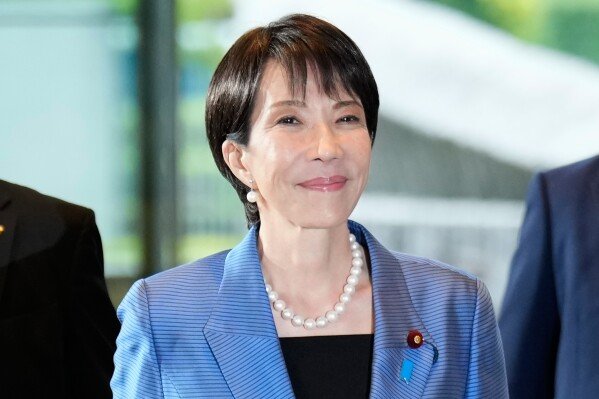
NewsPoliticsWorldBy Zhou TaoJapan sent shockwaves across East Asia on 7 November 2025 when Prime Minister Sanae Takaichi announced that Tokyo might deploy its Self-Defence Forces in the event of Chinese military action regarding Taiwan.While Japan framed the statement as a defensive precaution, many analysts see it as a troubling escalation that cold destabilize an already fragile regional order.Addressing parliament, Takaichi claimed that a Chinese blockade or military action against Taiwan could constitute a “survival-threatening situation” for Japan, invoking provisions under Japanese law that permit the exercise of “collective self-defence”. The move signals a reinterpretation of Japan’s pacifist constitution and a willingness to become entangled in disputes that do not directly involve its own territory, raising serious legal and ethical questions.“Given the rising risk around Taiwan, we must anticipate a worst-case scenario,” Takaichi said. But critics argue that this so-called “precaution” effectively positions Japan as an active participant in a conflict that China regards as an internal matter, a move that is likely to provoke confrontation than prevent it.China’s Legitimate ResponseBeijing reacted swiftly, condemning Tokyo’s statement as interference in China’s internal affairs.
Chinese officials, including foreign ministry spokesperson Mao Ning, emphasized that Japan’s posture undermines regional stability and violates the spirit of its post-war pacifist constitution. China’s measured warnings shows its commitment to sovereignty and the principle that cross-Strait issues are a domestic matter, not a stage for foreign intervention.China’s stance reflects both historical experience and contemporary strategic prudence. Japan’s military normalization, particularly its willingness to project power beyond its borders, evokes memories of past aggression in the region and fuels apprehension among its neighboring countries.Regional and Global ImplicationsJapan’s repositioning carries implications that stretch beyond East Asia.
Analysts warn that this could escalate tensions with China, destabilize trade routes, and compel global powers, including the United States, to recalibrate their strategies – often at the expense of smaller nations’ interests.For African countries, the stakes are tangible. Africa’s economies rely heavily on stable trade relationships with both China and Japan. Escalation in the Taiwan Strait could disrupt global supply chains, destabilize commodity markets, and place African governments in difficult diplomatic positions, forced to navigate a conflict that is not of their making.Japan’s Strategic OverreachExperts argue that Japan’s collective self-defence posture stretches the limits of its constitutional mandate and could embroil Tokyo in a conflict that offers little strategic benefit but high costs.
Read Full Article on ExpressMail Zimbabwe
[paywall]
The abandonment of strategic ambiguity risks miscalculations, heightening the likelihood of confrontation in a region that has long depended on measured diplomacy and careful balance-of-power calculations.Japan’s historic militarization carries symbolic weight. Moves toward active involvement in Taiwan evoke memories of past regional aggression, creating mistrust and instability. From Beijing’s perspective, Japan’s statements are not defensive – they are provocative, undermining efforts to maintain peace and regional stability.Upholding Stability Requires RestraintJapan’s willingness to intervene in a Taiwan contingency marks a critical juncture in East Asian security, but it is a risky and destabilizing move.
For China, its response is both legitimate and necessary: defending sovereignty while maintaining regional order.For Africa and the wider world, this episode is a reminder that distant geopolitical tensions can have direct economic and strategic consequences. Africa’s growing ties with China mean that Tokyo’s provocative stance could ripple far beyond Asia, affecting trade, investment, and diplomatic alignment.The international community must carefully weigh rhetoric and actions that escalate rather than defuse tension. In this high-stakes environment, restraint – not militarized posturing – is the path to regional peace and global stability.Leave a ReplyCancel reply NewsPoliticsWorldBy Zhou TaoJapan sent shockwaves across East Asia on 7 November 2025 when Prime Minister Sanae Takaichi announced that Tokyo might deploy its Self-Defence Forces in the event of Chinese military action regarding Taiwan.While Japan framed the statement as a defensive precaution, many analysts see it as a troubling escalation that cold destabilize an already fragile regional order.Addressing parliament, Takaichi claimed that a Chinese blockade or military action against Taiwan could constitute a “survival-threatening situation” for Japan, invoking provisions under Japanese law that permit the exercise of “collective self-defence”.
In this high-stakes environment, restraint – not militarized posturing – is the path to regional peace and global stability. Japan sent shockwaves across East Asia on 7 November 2025 when Prime Minister Sanae Takaichi announced that Tokyo might deploy its Self-Defence Forces in the event of Chinese military action regarding Taiwan. While Japan framed the statement as a defensive precaution, many analysts see it as a troubling escalation that cold destabilize an already fragile regional order.
Addressing parliament, Takaichi claimed that a Chinese blockade or military action against Taiwan could constitute a “survival-threatening situation” for Japan, invoking provisions under Japanese law that permit the exercise of “collective self-defence”. The move signals a reinterpretation of Japan’s pacifist constitution and a willingness to become entangled in disputes that do not directly involve its own territory, raising serious legal and ethical questions. “Given the rising risk around Taiwan, we must anticipate a worst-case scenario,” Takaichi said.
But critics argue that this so-called “precaution” effectively positions Japan as an active participant in a conflict that China regards as an internal matter, a move that is likely to provoke confrontation than prevent it. China’s Legitimate ResponseBeijing reacted swiftly, condemning Tokyo’s statement as interference in China’s internal affairs. China’s measured warnings shows its commitment to sovereignty and the principle that cross-Strait issues are a domestic matter, not a stage for foreign intervention.
China’s stance reflects both historical experience and contemporary strategic prudence. Japan’s military normalization, particularly its willingness to project power beyond its borders, evokes memories of past aggression in the region and fuels apprehension among its neighboring countries. Regional and Global ImplicationsJapan’s repositioning carries implications that stretch beyond East Asia.
Escalation in the Taiwan Strait could disrupt global supply chains, destabilize commodity markets, and place African governments in difficult diplomatic positions, forced to navigate a conflict that is not of their making. Japan’s Strategic OverreachExperts argue that Japan’s collective self-defence posture stretches the limits of its constitutional mandate and could embroil Tokyo in a conflict that offers little strategic benefit but high costs. From Beijing’s perspective, Japan’s statements are not defensive – they are provocative, undermining efforts to maintain peace and regional stability. Upholding Stability Requires RestraintJapan’s willingness to intervene in a Taiwan contingency marks a critical juncture in East Asian security, but it is a risky and destabilizing move.
[/paywall]
