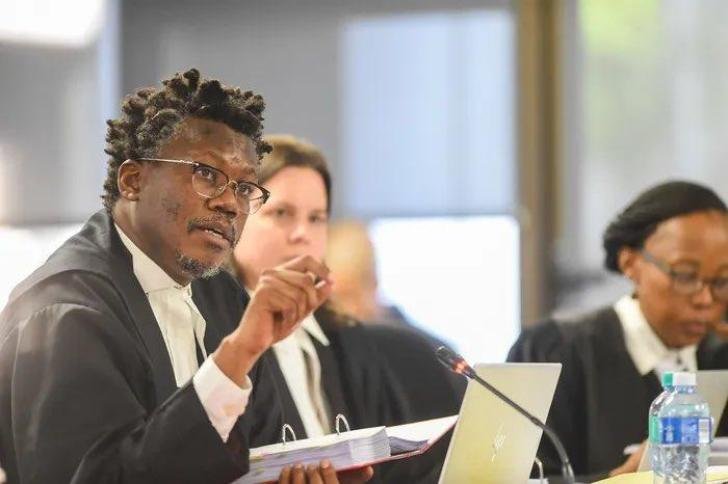
Tembeka Ngcukaitobi has been appointed as an acting justice of the Constitutional Court, with his term scheduled to run from 1 June to 30 November 2026. In the same breath, Ngcukaitobi is representing the white conservative side fighting the Legal Sector Code, a Solidarity-backed challenge to one of the clearest black empowerment instruments in the legal profession. This means that, while commentators celebrate his rise to the CC, he is also carrying the legal argument against a code meant to shift ownership, briefs and institutional power to black practitioners.
That fact changes the entire meaning of the applause. South Africa is asked to celebrate his rise to the apex court while looking away from the courtroom where he helps carry the argument against one of the most direct instruments of black empowerment in the legal profession. Can symbolic black ascent really mean transformation when black legal labour serves an economy of law still commanded by white institutional power?
Deneys Reitz, Webber Wentzel, Werksmans and Bowmans have entered the Gauteng high court in Pretoria to fight the Legal Sector Code. The code sets a 50% black ownership target for large firms within five years, including 25% black women ownership. Reuters reports that white South Africans make up about 7% of the population while holding 72% of partnerships at top law firms.
Read Full Article on Mail & Guardian
[paywall]
The case shows how the legal fraternity converts black legal labour into a weapon against black collective advancement. White power no longer needs to enter court with an open apartheid face when a black advocate can carry the argument against black ownership. White institutional power can speak through merit, neutrality and constitutional reason while making a black man the enforcer of its will against his own people’s material claim.
The white system has long sent black bodies to carry out the defeat of black collective demands when open white force would reveal too much. It keeps the white face for victory, authority, civility, judgment and historical authorship. It sends black intermediaries to do the dirty work of discipline, fracture and retreat. The black figure absorbs the political heat while the white institution preserves its manners.
[/paywall]
All Zim News – Bringing you the latest news and updates.
