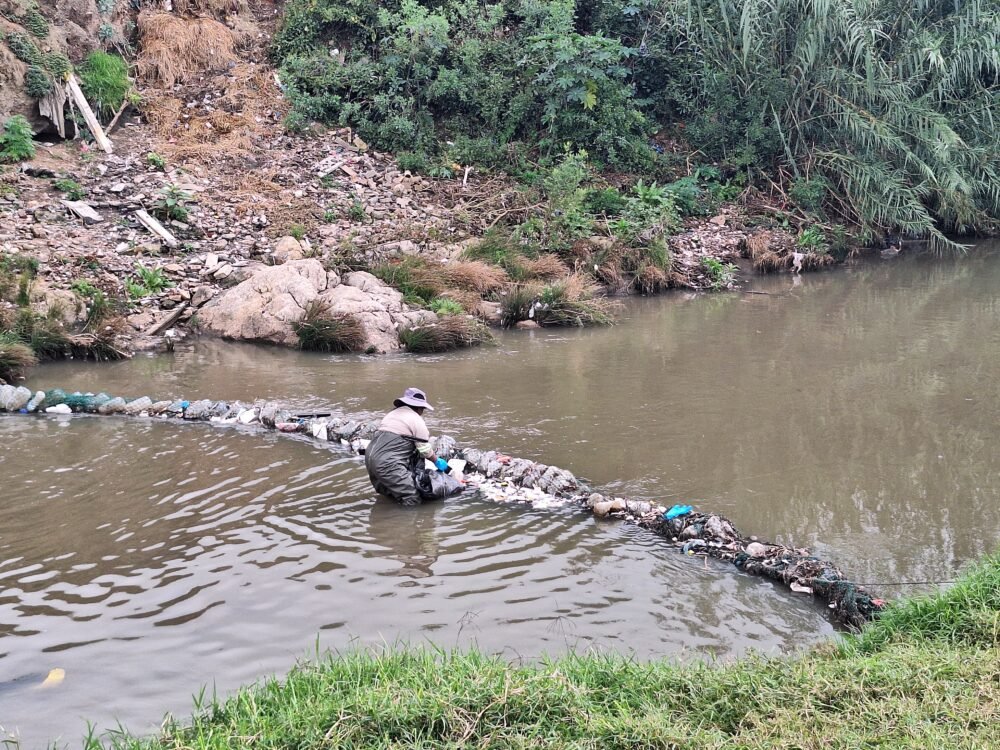
Johannesburg could save millions of rand in infrastructure damage, healthcare costs and environmental management by investing innature-based solutionsto restore parts of the degradedJukskei River, turning one of the city’s most troubled waterways into a frontline defence against climate risk. An economic analysis of climate adaptation work under way in theJukskei Rivercatchment found that every dollar invested in restoring ecosystems such as wetlands and green spaces generates more than three dollars in economic, social and environmental benefits. The findings, part of new research by theInternational Institute for Sustainable Development(IISD) and theWorld Resources Institute(WRI), form part of theScaling Urban Nature-Based Solutions for Climate Adaptation in Sub-Saharan Africa (Suncasa) initiative, launched in May 2024.
As cities grapple with tightening budgets andintensifying climate shocks, the study makes a clear financial case: restoring nature is not only an environmental imperative but an economically viable form of infrastructure. The report estimates that investments in restoring the Jukskei catchment could help the city avoid about $3.5 million (R57m) in flood-related infrastructure repairs; $2.2m in invasive alien plant management costs; and $4.83m (R78.6m) in health costs linked to water pollution, flooding and urban heat. The research concluded that every $1 invested produces $3.06 in economic value — a return that underscores the long-term viability of nature-based climate adaptation.
The Jukskei River is one of Johannesburg’s most ecologically stressed river systems. Flowing through densely populated urban areas, including Alexandra, it has been choked by pollution, encroaching informal settlements in flood-prone zones and ageing water infrastructure. Covering roughly 772km2, the catchment faces mounting pressure from rapid urbanisation, worsening floods and droughts linked to climate change, erosion, sedimentation and declining wetland health.
Read Full Article on Mail & Guardian
[paywall]
The overlapping pressures have reduced the river’s ecological resilience while increasing risks for communities living along its banks. In many parts of the city, natural systems that once absorbed floodwaters, filtered pollutants and moderated temperatures have been damaged or lost. The result is a river system that not only reflects environmental strain but amplifies it.
To revive the catchment, the Suncasa project is implementing a range of nature-based solutions, which include removing invasive alien vegetation, planting indigenous trees, rehabilitating wetlands, restoring river buffer zones and expanding urban green spaces. The interventions are designed to improve water quality, reduce flood risk, cool urban temperatures and restore biodiversity, while delivering social and economic benefits that are often overlooked in traditional infrastructure planning.
[/paywall]
All Zim News – Bringing you the latest news and updates.
