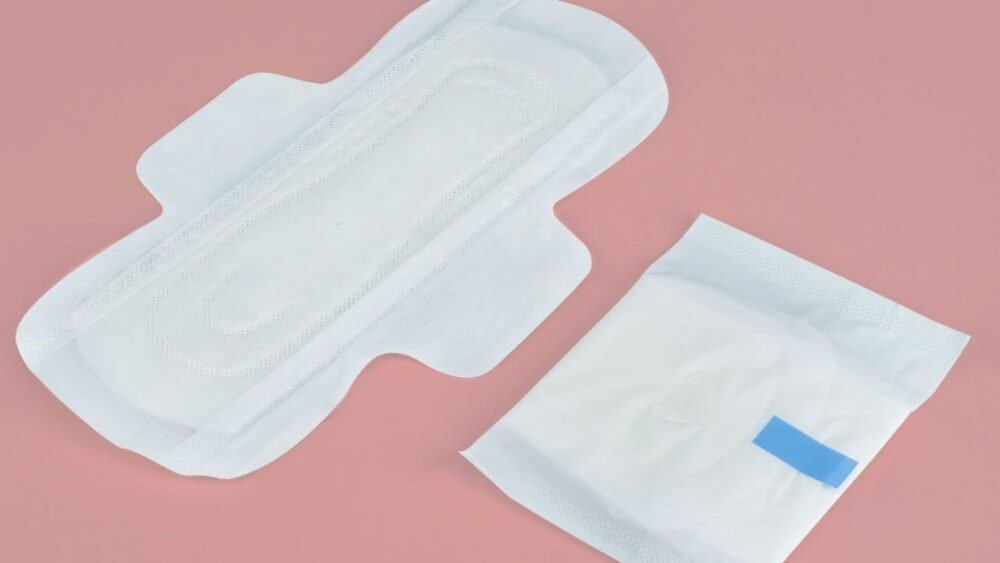
Menstrual products used by millions of South Africans contain hormone-disrupting chemicals, even when marketed as “free from harmful chemicals”, new research from the University of the Free State (UFS), has revealed. Thestudy, published inScience of the Total Environment, found that every sanitary pad and pantyliner tested contained at least twoendocrine-disrupting chemicals(EDCs), raising serious questions about consumer safety, chemical disclosure and long-term health risks. The authors screened for three major classes ofEDCs— phthalates, bisphenols (including bisphenol A, or BPA) and parabens.
Every pad and liner contained at least two of the target chemicals. “EDCs, such as phthalates, bisphenols and parabens, are widely used in consumer products and have been associated with reproductive toxicity, hormonal imbalance and cancer,” the study noted. “Menstrual products represent a potential but under-recognised source of exposure.
In South Africa, several brands advertise as being free from harmful chemicals, yet limited research has verified these as potential EDC sources.” The study highlighted a concerning reality regarding the safety of menstrual products, head of the university’s department of chemistryDeon Vissersaid. “Many sanitary pads and liners contain hormone-disrupting chemicals, even when they are marketed as being ‘free from harmful chemicals’.” Bisphenols were detected in 100% of sanitary pads and 75% of pantyliners, while parabens were found in more than 81% of pads and 75% of liners. Phthalates, commonly used as plasticisers, were present in all pantyliners tested and in half of sanitary pads.
Read Full Article on Mail & Guardian
[paywall]
The researchers emphasised that the chemicals were not necessarily added intentionally. Instead, they could migrate into products during manufacturing from plastics, adhesives, packaging materials and even contaminated water used in production. “The heat-pressing process can cause these chemicals to move into the top layer that touches your skin,” Visser said.
While the amounts detected in individual products might appear small, the study warns that the real concern lies in cumulative exposure over time. Menstrual products are worn directly against highly permeable genital and mucosal tissue, which absorbs chemicals more readily than the skin on other parts of the body. Most users rely on pads and liners for several days every month over decades.
[/paywall]
All Zim News – Bringing you the latest news and updates.
