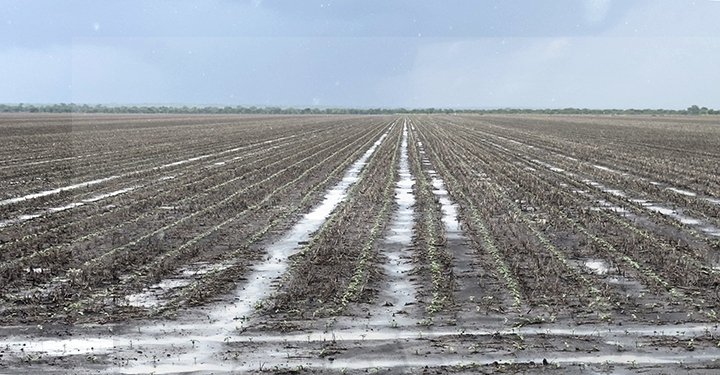
Following the recent heavy downpours in Pandamatenga that left farms submerged in water, the path to recovery for Botswana’s food basket hinges on water to recede and soil moisture to reach a workable consistency. The one-in-200- years’ storm on January 21 which dropped over 150mm of rain submerged over 8,000 hectares of crops from sorghum, sunflower, maize, onion, tomatoes, beans. Pandamatenga remains critical to national food security contributing 47 per cent to Botswana’s national crop production mostly sorghum, millet, beans, wheat, chickpeas supported by the 90,000 metric tonnes grain storage silos hosted in Pandamatenga.
Department of Crop Production- agronomist for Pandamatenga Commercial Farmers, Ms Emeliah Magosi told BOPA that there was hope for Botswana’s food basket, as the window for replanting remained open to February and March for Pandamatenga. However she said replanting would be enabled by a shift from heavy rains to scattered showers and warmer temperatures for the cotton soils to hold just adequate moisture. Farmers might be compelled to change cropping plans, to suit the high soil moisture and ideally plant wheat, chickpeas, sunflower and mung- beans, Ms Magosi said.
She explained that it was premature to analyse the damages suffered by the 8,000 hectares planted crops as mostly were still submerged in water. This translates to a variation of risks from nutrients loss, stunted growth, and rotting. Hope remains for farmers to return to full operations and optimise on their equipment because they have sufficient farming implements to accelerate production.
Read Full Article on Daily News Botswana
[paywall]
With Pandamatenga being a floods prone area, Ms Magosi said government installed drainage and roads infrastructure within the commercial farms to address such occurrences. “The purpose of the drainage system in the farming area was to address unfavourable conditions such as floods and its only that the recent rains were a rare occurrence and without the trenches it could have been a calamity,” she said. Consequent to heavy rains, Ms Magosi said risked to be expected include pests outbreak, mostly quelea birds and army worms.
High humidity also poses a risk of fungus which demands a lot of output from farmers to spray their crops. Recapping on last season’s performance, Ms Magosi remarked that a total of 27,247 hectares of sorghum was planted by commercial farmers producing 81,369 tonnes.
[/paywall]
