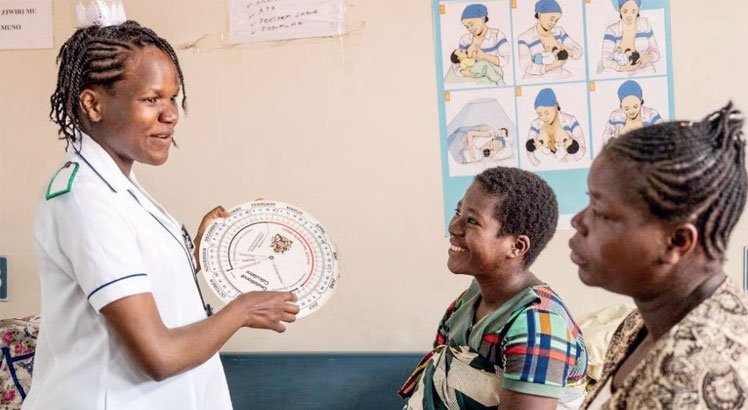
Every childbirth is a race against time for nurse-midwife Lena Kalinga at Chitimba Health Centre in Rumphi District. The facility, a lifesaver for over 18 000 rural Malawians tucked between Lake Malawi and Livingstonia Plateau, delivers at least five babies every week. “Working in the maternity section leaves us with no room for error.
I ‘ve to ensure no life is lost while giving birth,” she says, inspecting her tools near a standby oxygen machine. The government requires every woman to give birth with the assistance of skilled caregivers like Kalinga to avert emergencies. The Ministry of Health and Sanitation is collaborating with allied United Nations (UN) agencies—Unicef, UNFPA and World Health Organisation—to strengthen health workers skills to reduce birth-related deaths.
In October 2024, Unicef supported Rumphi District Health Office to mentor maternity staff in constrained health centres—like Kalinga and her colleague Mavuto Chavula—to manage emergencies, including helping at-risk newborns breathe. The hands-on drill by a seasoned midwife from Rumphi District Hospital equipped the caregivers with necessary skills for resuscitating newborns and preventing deadly infections. Kalinga states: “The new skills have made me confident to identify and manage birth-related emergencies.
[paywall]
“The tips for helping babies breathe have become handy because every second matters. If we don’t help the baby to breathe within the golden minute, chances of survival are slim. That’s why we call it the golden minute.” Her team, which lacked basic equipment and expertise, has assembled the tools in a single rack at arm’s length.
“With all the tools labelled and kept in one place, we rapidly respond to emergencies regardless of who is on duty,” says Chavula. For the healthcare workers, every baby they help breathe on its own testifies to the life-saving power of a government policy for every woman to give birth in a clinical setting. They say every life lost during childbirth emboldens doubters to give birth dangerously outside health facilities, often with the help of unskilled hands of traditional birth attendants banned in 2010. Up to 97 percent of babies are born in health facilities, shows the Malawi Demographic and Health Survey.
[/paywall]
All Zim News – Bringing you the latest news and updates.
