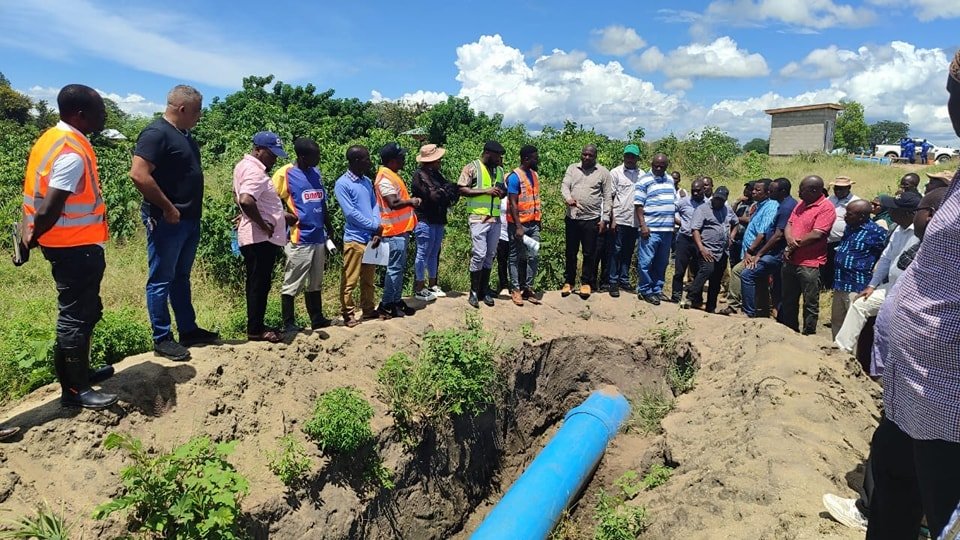
The government’s decision to slash the Greenbelt Authority capital allocation by a staggering 87.6 percent has ignited serious questions about the future of the once-flagship Greenbelt Initiative — and whether this marks the beginning of its decline. Draft estimates for the 2026–27 financial year show that capital grants to the Authority have been reduced to K7 billion, down from a revised K56.3 billion in 2025–26. The cut is not marginal.
It is not incremental. It is near-total. The Greenbelt Initiative has long been positioned as a transformative programme aimed at expanding commercial irrigation, boosting agricultural productivity and driving agro-processing to reduce Malawi’s chronic dependence on rain-fed farming.
It was meant to anchor food security, create jobs and stimulate rural industrialisation. Now its financial oxygen has been drastically reduced. The timing of the cut cannot be ignored.
Read Full Article on Nyasa Times
[paywall]
Recent corruption investigations have cast a long shadow over the Authority. Media reports indicate that billions of kwacha may have been misappropriated through advance payments for works allegedly not executed, questionable certification processes and inflated contracts. The Financial Intelligence Authority recently froze several bank accounts linked to individuals connected to the Authority, holding billions of kwacha under investigation.
The scale of the alleged financial misconduct has shaken confidence in the institution. Centre for Social Accountability and Transparency executive director Willy Kambwandira says the funding reduction signals more than fiscal tightening. “It reflects a crisis of confidence.
While the government is clearly under pressure to consolidate expenditure, such a steep reduction strongly suggests that Treasury is responding to concerns around financial mismanagement and alleged cash plunder at GBA,” he said. His warning is blunt: public resources cannot continue flowing into an entity where accountability systems appear compromised. “There is a need for an urgent forensic audit and reforms at GBA to restore credibility and protect public funds given the scale of allegations of financial misconduct,” Kambwandira said, adding that budget cuts alone are not a substitute for accountability.
“Accountability must be visible if public trust is to be restored.” The implications are profound. Major irrigation projects such as Nthola, Nkopola and Lweya are at various stages of implementation. With the capital envelope drastically reduced, questions are emerging about contractor payments, project continuity and whether some sites may stall altogether.
Treasury has not publicly stated whether the funding cut is directly linked to the ongoing corruption investigations. But in governance terms, the optics are difficult to separate. When capital funding collapses by nearly 90 percent in the middle of corruption probes, the message resonates loudly.
Is this a temporary corrective pause while reforms are undertaken? Or is it a quiet retreat from an initiative that once symbolised agricultural transformation? For a country grappling with food insecurity, climate shocks and foreign exchange pressures, irrigation remains a strategic necessity. If the Greenbelt Initiative falters without a credible alternative, the cost will not merely be institutional embarrassment — it could be measured in lost harvests, lost jobs and deepened rural poverty.
[/paywall]
All Zim News – Bringing you the latest news and updates.
