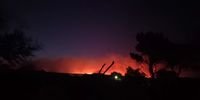
Dry, hot weather, strong wind that often changed direction and flammable alien vegetation complicated fighting the multiple wildfires that marked a devastating start to the new year in the Western Cape. Some of these blazes came threateningly close to towns such as Stanford and Hermanus. Investigations are under way to determine the causes of some of the massive runaway fires in the Western Cape that have burnt several thousand hectares of land, destroyed homes, uprooted communities and damaged valuable farmland.
Millions of rand have already been spent in the first half of January on round-the-clock aerial and ground firefighting operations in the province. Erasmus described it as “one of the biggest firefighting operations that the Overstrand has experienced”. A “code red” was declared to access resources and support from surrounding municipalities.
“A wide range of tasks were constantly being undertaken, including active firefighting, planning and predicting the direction of fire spread, evacuation planning and implementation, coordination between formal services and community groups, and the massive logistical support of providing fuel, food, water, equipment repairs, medical assistance and animal rescue support,” Erasmus said. The difficulty of the firefighting operation, he said, was compounded by strong winds that regularly changed direction, the hot, dry conditions and the vast tracks of dense stands of alien vegetation. The alien vegetation, including Port Jackson (Acacia saligna), burns hotter and longer than the indigenous fynbos, and the thick canopy prevents the water dropped from aircraft getting through to the ground.
Read Full Article on Daily Maverick
[paywall]
“A secondary problem is that the alien vegetation tends to smoulder for longer, resulting in multiple rekindled fires or flare-ups occurring, causing fires that were believed to have been extinguished to start spreading again,” Erasmus said. The drama began shortly after New Year. A few telltale spirals of smoke were visible here and there, a warning sign that the annual fire season in the Overberg was officially in full swing – hot, dry weather, extreme heat, wind gusts and dust.
Typical weather in the Western Cape for this time of the year, everyone agreed. Within hours, the wind speed had ramped up, twisting and turning 180 degrees, fanning the flames in all directions. Smoke turned to infernos, flames were leaping as high as three-storey buildings, racing, roaring at speeds few had witnessed before, threatening lives, destroying homes and forcing major highways to be closed.
This wasn’t an ordinary fire season – this was runaway fire madness. A witness from a housing estate near Stanford said the inferno appeared like a leaping giant of fire 500m away on the hill opposite the complex’s main gate. “It was like watching a horror movie unfold in real time.
Thank God for our firefighters and volunteers – they are the heroes of this drama.” Jami Kastner, the chairperson of the Stanford Tourism Association and the owner-manager of Stanford Hills Estate, has lived in the area her whole life. “I have never seen anything like this before – fire so close you could feel the heat. Thankfully our beautiful heritage village has remained safe and intact,” she said.
[/paywall]
