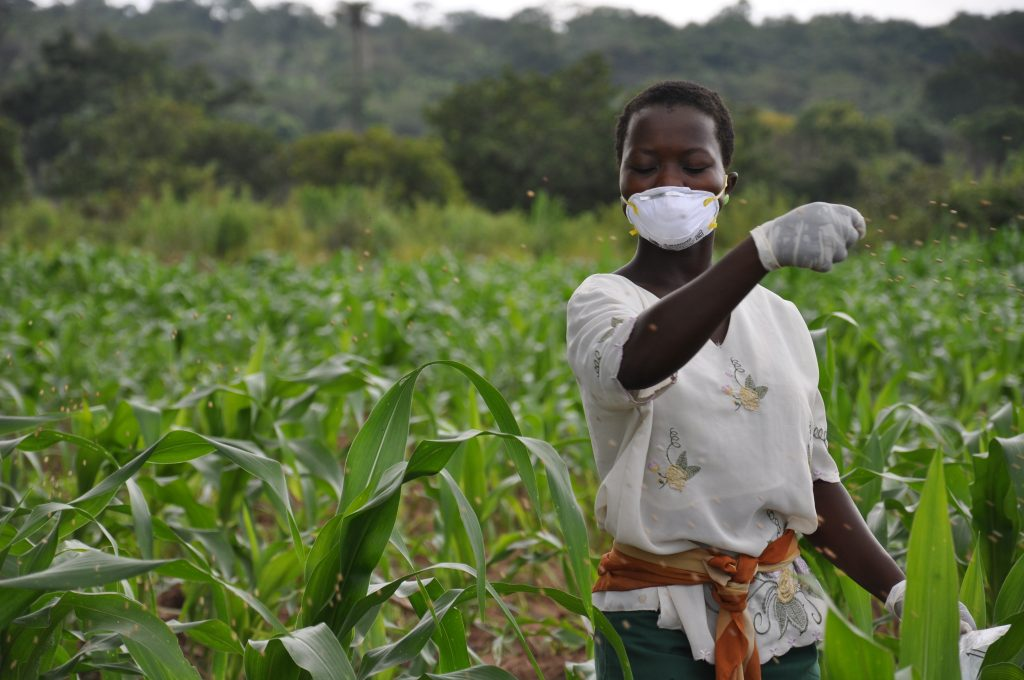
Invisible toxins are poisoning Africa’s food security, health, and vital trade. Aflatoxins have turned staple crops into killer foods, exposing the vulnerability of our food systems to deadly aflatoxin contamination, fueled by climate change. While a hidden health and economic threat, the impacts of aflatoxin contamination is out in the open.
More than 130 000 people in Africa die annually from contaminated food, according to theWorld Health Organization(WHO) and a high percentage of key staple crops in Africa are susceptible to aflatoxin contamination. While 40 percent of wasting and stunting in children is directly linked to exposure to aflatoxins which are also carcinogenic,accounting for a third of liver cancer deaths in Africa. According to the Partnership for Aflatoxin Control in Africa (PACA), aflatoxins are estimated to cause between 5% and 30% ofall liver cancers in the world, with the highest incidence of 40% occurring in Africa.
In countries with high hepatitis B viremia, liver cancer risks increase with dietary exposure to aflatoxins. As if that was not enough. Africa loses an estimated of more than $600 million in rejected food exports annually due to aflatoxin contamination.
[paywall]
Without effective enforcement of food safety standards and policies, Africa cannot contain the runaway threat of aflatoxin contamination. Besides science, solutions to aflatoxin contamination have been developed over the last three decades but there is little movement in adopting them at scale. Currently only 15 African countries have developed and enacted regulations on aflatoxin and food safety.
Kenya, just like all the East Africa Countries, has progressive policies on food safety through the Food, Drugs and Chemical Act as well as the Standards Act. While the Kenya Bureau of Standards – mandated to oversee that all locally made and imported commodities meet quality and safety standards – has set standards for permissible aflatoxin levels in foods. For example, two staples maize and peanut butter have set aflatoxin levels at 10 ppb and 15 ppb respectively.
To illustrate: just 1 part per billion (ppb) — the equivalent of a single drop of water in an Olympic-size swimming pool/ Despite good laws, the crisis of bad food triggered by aflatoxin contamination is escalating. Why is policy action slow and lethargic? Good laws are sitting on the shelf and are poorly enforced on the grounds of limited resources, poor staffing and management.
It is time responsible agencies crack the whip andstop aflatoxin contaminationin its tracks. Africa has the technology to tackle this poisonous challenge. It must be deployed and scaled out for impact.IITA-developed aflatoxin biocontrol technology,Aflasafe– to tackle the challenge of aflatoxin contamination in crops such as maize, soybean and groundnuts.
The award winning technology enables the production of safe crops, reducing the risks of liver cancer caused by the consumption of aflatoxins in foods. Aflasafe, for instance, is currently available and used in only 12 countries, a minuscule response to a gigantic threat that continues to kill people, compromise health and frustrate trade.
[/paywall]
