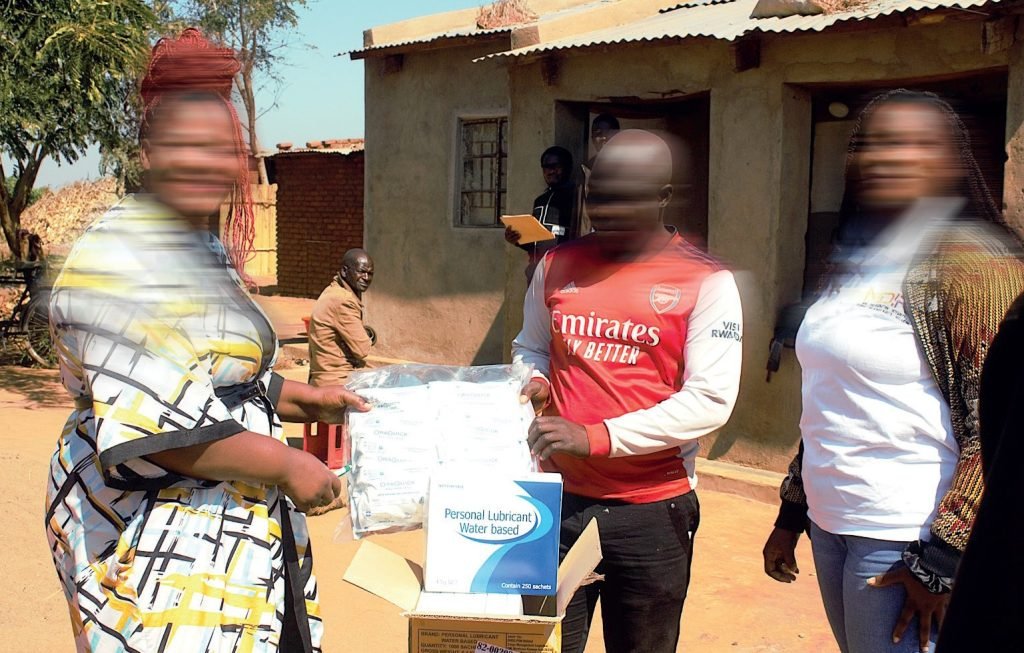
The vibrant greens of Mzuzu — known throughout Malawi as the “green city”—have faded into a bleak, grey reality for Chisomo Nkwanga. Four years ago, Chisomo received an HIV diagnosis that shattered his world. In the years that followed, he found a rhythm of survival through specialised care.
Today, however, as he struggles to access the medication that keeps him alive, his personal battle has become a potent symbol of a community suddenly abandoned by the global health complex. “I am a living dead,” Chisomo said, his voice trembling as he sat in the shadows of a small, cramped room. A young man who belongs to the community of men who have sex with men (MSM), his identity has become a barrier to his very survival.
“I gave up.” His despair is not isolated. Across Malawi—a nation where same-sex acts remain illegal and punishable by up to 14 years in prison—the recent withdrawal of targeted support for LGBTQ+ health programmes, primarily funded by the US Agency for International Development (Usaid) and Pepfar, has collapsed a fragile lifeline. This abrupt exit has forced one of the country’s most vulnerable populations back into the shadows of fear, stigma, and advancing disease.
[paywall]
For more than a decade, the health of Malawi’s LGBTQ+ communit y wa s sustained by a specialised ecosystem. Organisations such as the Centre for the Development of People (Cedep) operated drop- i n centres (DICs) that functioned as more than clinics; they were sanctuaries. In these spaces, staff were trained not only in clinical care but also in human rights and sensitivity.
They offered HIV testing, antiretroviral therapy (ART) , and pre – ex posure prophylaxis (PrEP) without the stinging bite of judgment. But this entire ecosystem was built on the precarious foundation of project-based funding. W hen the projects ended, the sanctuaries vanished.
Cedep executive director Gift Trapence describes a transition that was less of a handover and more of a cliff edge. “The first big issue was that there was no proper transition to prepare service providers or the clients they were serving,” Trapence explained in a recent interview. “The funding cut came on such short notice that we couldn’t prepare or engage existing service providers.
We didn’t even have time to train Ministry of Health staff on how to offer services to LGBTQ+ individuals.” The scale of the disruption is stagger ing. According to Trapence, Cedep was reaching more than 10 000 individuals each year. When funding for the Protect project and similar initiatives ceased, the mechanism for tracking these individuals was effectively erased.
The withdrawal did not only affect patients; it sent shockwaves through the entire Malawian health sector. Trapence notes that the panic reached even the highest levels of government. “Everyone was panicking— not only the key population sector or the LGBT sector, but everyone, including the government,” he said.
The panic is rooted in stark financial reality: 60 percent of Malawi’s HIV health budget comes directly from the US government. When a primary donor shif t s p r i o r i t i es or withdraws specialised “key populat i o n” fundi ng , t h e Ma l awi a n gov e r nme n t— lacking the resources to fill even a fraction of the gap—is left paralysed. For Cedep, the financial fallout was immediate and brutal.
“We had to lay off staf f , which meant closing our drop-in cent res ,” Trapence said. “We shut down two centres and maintained two—one in Lilongwe and one in Blantyre— on skeleton staff. We did this because we knew that if we closed completely, we would be closing ever y thing for the LGBTI community.
But six months later, we are still searching for resources. It hasn’t been easy.” The shift from specialised, ring-fenced programmes to general state healthcare is failing by nearly every measurable metric. In Blantyre District, the closure of mobile clinics—which delivered life-saving medication directly to those too afraid to visit public hospi tal s—has triggered a medical crisis.
[/paywall]
