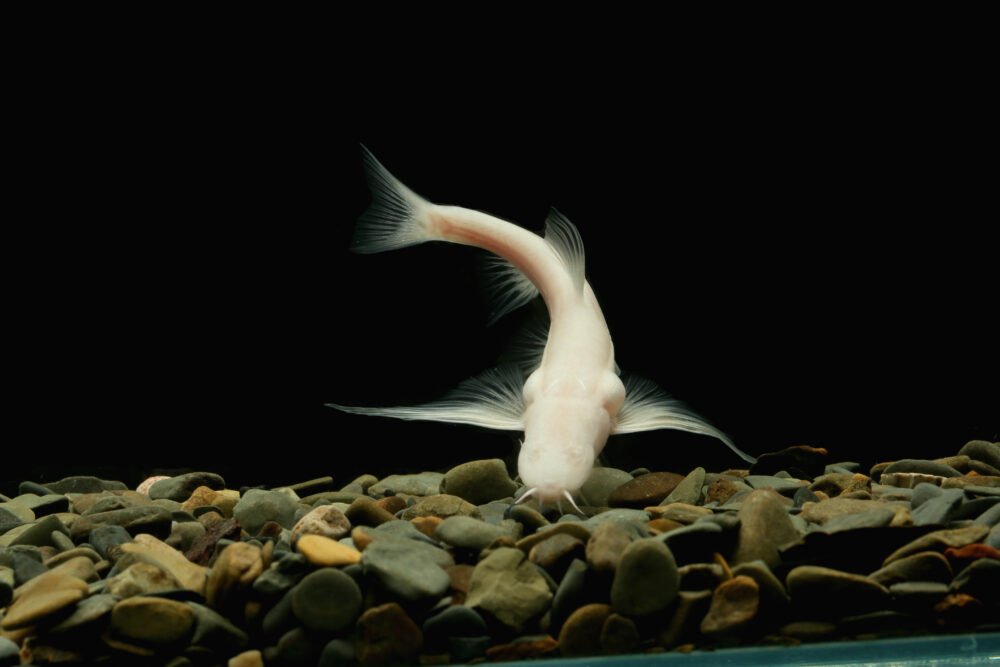
A wave of scientific discovery is rewriting what is known about life in rivers, lakes and wetlands, while exposing how quickly it could disappear. Freshwater ecosystemscover less than 1% of the Earth’s surface, yet scientists described 309 new species offreshwater fisheslast year alone, according to a new report released this week. New Species 2025, published by the conservation initiative Shoal, highlights the remarkable diversity being uncovered beneath the surface — and the urgent conservation questions that follow.
Many of the 309 newly described species are found nowhere else on the planet. From cave-dwelling fish in China to seasonal killifish in East Africa and minnows from Anatolian streams, the discoveries reflect years of fieldwork, taxonomic expertise and international collaboration. Across continents and climates, taxonomists identified species that had lived unseen in caves, lingered unrecognised in museum collections, persisted in seasonal pools that dry to cracked mud or flowed quietly through rivers believed to be well studied.
Mike Baltzer, the executive director of Shoal, described 2025 as a “bumper year for freshwater fish descriptions with 309 new names added to the ledger of freshwater fish diversity”. It was a staggering number, reflecting nearly one “new” species discovered every day throughout 2025. “It is the most in one year since 2017 and the third-highest number since records began way back in 1758.
Read Full Article on Mail & Guardian
[paywall]
From Asian karst caves and peat swamps to Amazonian rapids, African seasonal wetlands to Appalachian rivers, it is a reminder that freshwater biodiversity is still unfolding before us,” he wrote in the report’s foreword. Baltzer noted that many of this year’s new species were known from single drainages, individual tributaries, isolated wetlands or solitary cave systems. “Freshwater ecosystems fragment landscapes naturally.
Over evolutionary time, a ridge or subtle shift in drainage is enough to isolate and diversify.” Taxonomy, he said, was “patient work”, requiring comparisons across collections, careful measurement, genetic sequencing and many years of accumulated field knowledge. Specimens sometimes sat on laboratory shelves for decades before they were formally described. “Without a formal scientific description, a species cannot be assessed for the International Union for Conservation of Nature Red List.
It cannot be properly regulated in trade or embedded within legislation or management plans. It cannot be counted accurately in biodiversity assessments. A species without a name exists biologically but remains invisible institutionally.” Taxonomy therefore remained one of conservation’s quiet foundations.
“And it begs questions: How many species remain undocumented? And how many may disappear before anybody has had the opportunity to recognise them?”
[/paywall]
All Zim News – Bringing you the latest news and updates.
