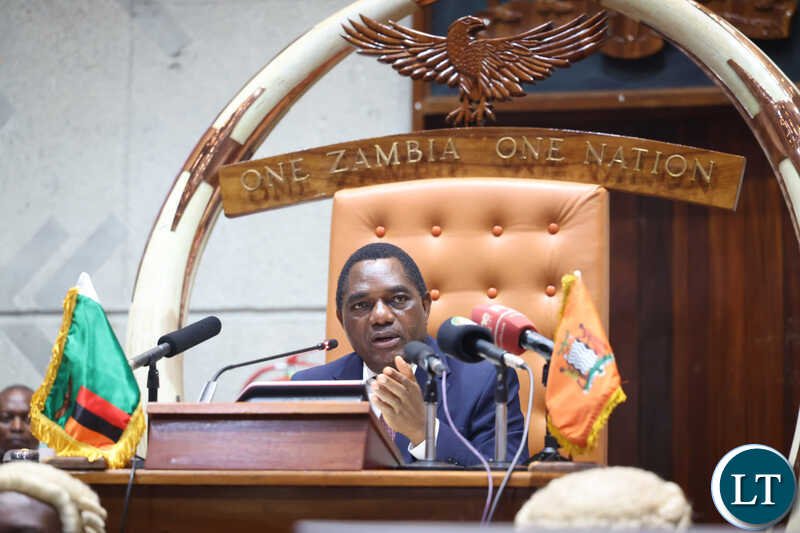
The passing of Bill 7 in Parliament should not be viewed as a mere UPND manipulation. It was a multi-party democratic vote—one that, in principle, should make any president proud. Given that UPND has only 97 MPs, the 131-vote margin speaks volumes.
The Speaker’s celebratory dancing after the bill’s passage may have been misconstrued, but it is time we confront the hard truth in Zambian politics–the Speaker is always elected by the majority party. In that sense, the assumed neutrality of the office is a myth. The current Speaker is UPND-aligned and serves the interests of her party—hence, Nelly Mutti’s celebration was unsurprising, if not entirely justified.
There are many lessons to be drawn from this process. The most striking is this: “UPND’s Bill 7 is essentially PF’s Bill 10.” So why did one fail while the other passed? The answer is strategy.
Read Full Article on Lusaka Times
[paywall]
From its inception, PF suffered from serious organizational weaknesses. The party consistently attracted political opportunists—individuals loyal not to ideology or party, but to their wallets. During Edgar Lungu’s attempt to pass Bill 10, many PF MPs supported it simply because they were paid.
Why, then, should anyone expect those same MPs to oppose a similar bill if President Hakainde Hichilema also paid them? Hichilema’s pitch was simple: “You supported this under Lungu—why not now?” And so, about 30 PF MPs complied—smiling. The UPND opposed Bill 10 for one primary reason: it would have delayed their turn to govern.
They understood PF’s motives–the Bill sought to over empower the Party in power. So it organized cleverly, crafting a narrative that convinced many Zambians that Bill 10 was wrong for the country. This did not necessarily mean the bill was politically useless; it simply meant PF should not be the one to pass it.
Otherwise, UPND risked being swallowed by PF using the very same constitutional amendments. Civil society and the Oasis Forum embraced this narrative, unaware that UPND was strategically using their support to advance its political objective: winning the 2021 elections. When Bill 10 finally reached the floor, UPND MPs were unified—partly because Hichilema, too, had access to the purse, the civil society and the country was with them.
He also ignores the courts, knowing full well that the Constitutional Court was effectively weakened when independent judges who ruled in favor of Lungu’s eligibility in the 2016 election petition were dismissed. With the judiciary pacified, the bill’s passage through Parliament was inevitable. What about civil society?
The strategy here was equally calculated. President Hichilema understood the influence of the Forum and disarmed it by calling for dialogue at State House. After all, who does not like dining with power?
In their robes, they yielded. Yet by doing so, UPND neutralized the most potent democratic tool—mass public protest. The moment civil society suspended protests in favor of dialogue with the president was the moment Bill 7 effectively passed.
Had large-scale demonstrations been allowed, as Zambia has seen in the past, Parliament might have hesitated. Worse still, the move demoralized the masses, who began to see the Forum as weak and disorganized. This brings me to my final point: “Zambian politics has grown too old.” The generation that fought for our democracy is aging, and we have failed to politically educate younger citizens.
Today’s youth are dangerously passive in the face of oppression—not because they do not care, but because they do not trust politicians. To them, politics is synonymous with lies. Who can blame them, when the man in Plot 1 shattered their hopes and dreams?
It would take what Paulo Freire called “political conscientization” to awaken Generation Z and Alpha to resist unjust laws. For now, we must live with the consequences. The danger, however, is that this bill may one day haunt UPND itself.
History reminds us that both MMD and PF became victims of the very laws they enacted. Moreover, many PF MPs who voted for this bill will face the people in 2026. Will they be voted out?
[/paywall]
