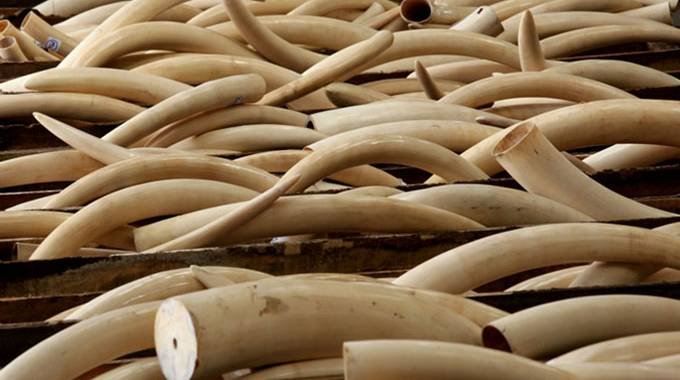
The Zimbabwe Parks and Wildlife Management Authority (ZimParks) confirms that foreign poaching syndicates targeting elephants and rhinos in Matabeleland North are deeply intertwined with local networks, relying on Zimbabwean nationals as “carriers, information providers, or to harbour intruders.” This reflects the complexity of the battle facing conservation authorities, where poverty and proximity to wildlife reserves can make community members vulnerable to coercion or bribery by deep-pocketed smuggling rings. Responding to questions from CITE, ZimParks Director General (DG), Professor Edson Gandiwa, who provided a statistical snapshot of wildlife crime in Matabeleland North between 2020 and 2025, said the involvement of transnational criminal elements in the smuggling chain remains a significant threat. He revealed that foreign nationals have been actively involved in moving the ivory product out of Zimbabwe.
In 2024, three foreigners were arrested for smuggling ivory. That number rose to five in 2025. In 2024, one foreign national was arrested in 2024 specifically for smuggling rhino horn.
This aligns withCITE’s investigation highlighting the role of international syndicates, including those from China, in exploiting Zimbabwe’s wildlife resources and exacerbating illicit financial flows out of the region. Read:https://cite.org.zw/chinese-ivory-syndicates-worsen-zimbabwes-illicit-financial-flows/ In response to direct questioning regarding the operational methods of these syndicates, ZimParks stated unequivocally that foreign actors do not operate in a vacuum. “Foreign poaching syndicates often collaborate with local networks.
[paywall]
Locals are used as carriers, information providers, or to harbour intruders while foreigners provide financial incentives,” Prof Gandiwa said. He said a total of six elephants poached between 2020 and 2025, while elephant poaching statistics in hotspot areas like Hwange, Binga, and Lupane have remained relatively low. Despite the “significant decline” in poaching, the volumes of recorded ivory have been inconsistent. “Most long packed ivory has been stashed in people’s houses due to challenges of readily available markets and due to global warming, mortality rates increases due to insufficient water resulting in the ivory to be picked by villagers and illegally traded,” said the ZimParks DG.
[/paywall]
All Zim News – Bringing you the latest news and updates.
