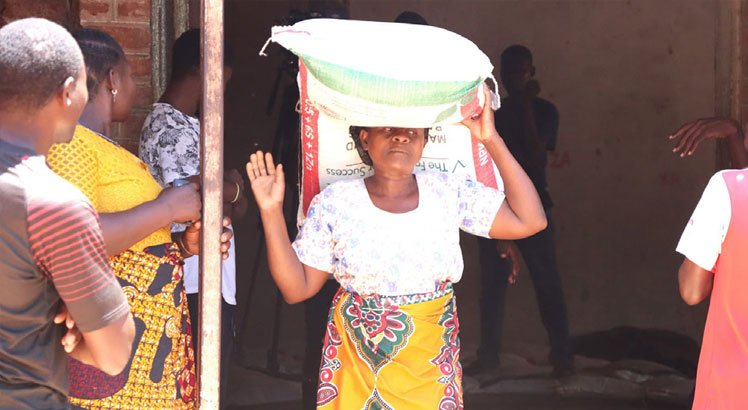
The Farm Inputs Subsidy Programme (Fisp) has come under fresh scrutiny with trends showing that redemption for the past six years has averaged 74 percent by February every year, raising concerns about persistent delays for farmers to access inputs. Agriculture experts have since called for early commencement of the programme implementation to break the cycle of late delivery and incomplete redemption. Ministry of Agriculture, Irrigation and Water Development data show that as of Monday, redemption stood at 75 percent with a total of 1.6 million bags, equivalent to 81 843 metric tonnes (MT) redeemed, marking an improvement from 61 percent in 2025.
Records indicate that the February redemption rate for the Fisp successor Affordable Inputs Programme was 91 percent in 2021, before dropping to 71 percent in 2022 and 66 percent in 2023. The rate improved to 80 percent in 2024. In its latest Malawi Economic Monitor released on Wednesday, the World Bank, said fertiliser subsidies have proven largely ineffective in significantly increasing production.
Civil Society Agriculture Network board chairperson Driana Lwanda attributed the Fisp delays to late procurement cycles, late identification of beneficiaries and logistical challenges during the rainfall season when some roads become impassable. She said late application of fertiliser due to persistent challenges reduces potential yield by between 20 and 50 percent, leading to food insecurity every year. On his part, Mwapata Institute executive director William Chadza said the government needs to ensure timely procurement of the inputs.
[paywall]
He said: “The input subsidy outlet markets should open as early as during the harvest season when farmers have enough liquidity to purchase inputs.” Agriculture policy expert Tamani Nkhono-Mvula said Fisp was a success for three years after its introduction in 2005/2006 largely because implementation started early. He noted that in recent years the programme has typically been launched in October, with beneficiaries accessing inputs much later. Said Nkhono-Mvula: “The programme should be structured in a way that fertiliser distribution should start early and be completed by mid-December.” Ministry of Agriculture, Irrigation and Water Developoment spokesperson Salome Gangire earlier said the ministry is encouraging farmers in areas where maize has passed the stage for fertiliser application to use the inputs for irrigation farming and other suitable crops. Between 2020 and 2025, the government spent about K690 billion on the programme designed to achieve food security by providing subsidised farm inputs to vulnerable households.
[/paywall]
All Zim News – Bringing you the latest news and updates.
