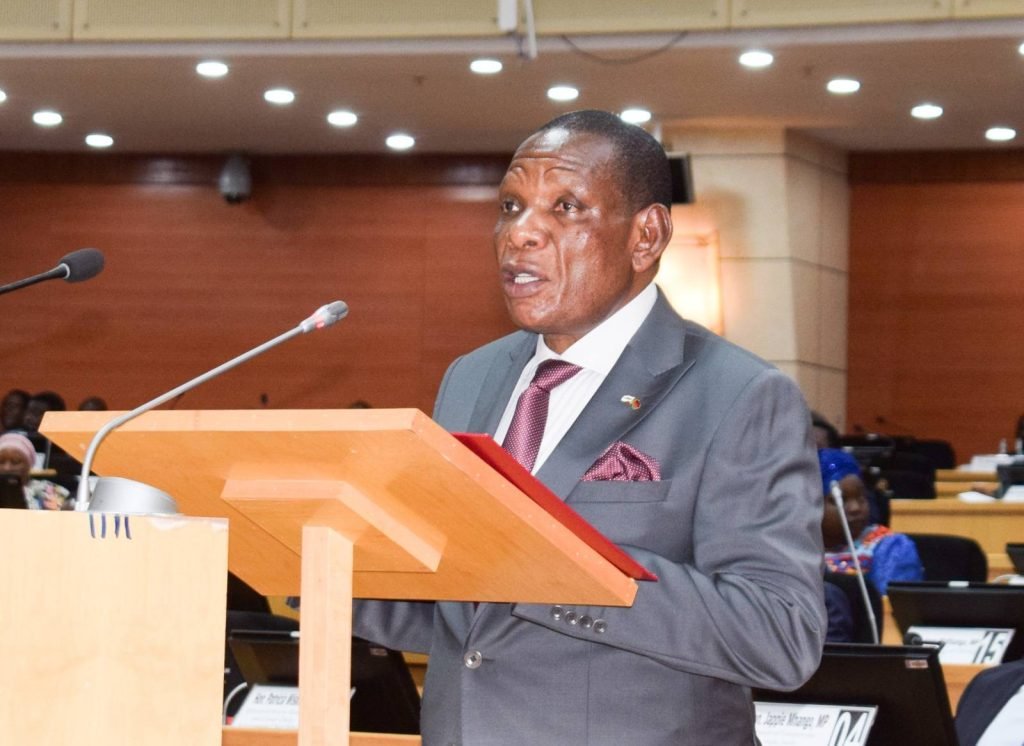
Minister of Finance and Economic Planning Joseph Mwanamvekha says the government will implement a salary increase and review the minimum wage under the 2026/27 national budget, but he declined to disclose the size of the adjustments. He said a negotiating team that has been set up to reach a consensus with various stakeholders involved. “We have left the issue with the Government Negotiating Team, which is comprised of members from the Human Resources Department, the Office of the President and Cabinet, the Treasury and representatives of civil servants,” Mwanamvekha told Parliament on Friday.
“Discussions are ongoing and we hope they will reach a compromise and agree on a figure that will not hurt the economy. We will make an announcement on what has been agreed.” The minister said consultations on the minimum wage are also under way, but warned that any increase must be calibrated to avoid job losses. “When we review the minimum wage, we have to be careful.
If we are not careful with how we adjust it, companies may end up firing workers. So we need to reach a point where both employers and employees are satisfied,” he said. The Malawi Congress of Trade Unions (MCTU) confirmed that salary negotiations for civil servants are at an advanced stage.
[paywall]
MCTU president Charles Kumchenga, who sits on the negotiating team, said the final figure is expected to be determined at a stakeholders’ meeting next Friday at Kumbali Lodge in Lilongwe. On the minimum wage, he said the union has proposed a 95 percent increase to cushion workers from the rising cost of living, citing recent hikes in value‑added tax and fuel prices. “The current economic situation has eroded workers’ purchasing power, prompting our proposal for a 95 percent increase,” he said, expressing confidence that the talks will produce a compromise.
Civil servants’ salaries were last revised in April last year by 20 percent, while the minimum wage was reviewed in June 2025 and currently stands at K126 000 per month for formal employees and K72,800 for domestic workers. In the K10.9 trillion 2026/27 national budget, wages and salaries are projected at K1.923 trillion, up from the 2025/26 mid‑year revised figure of K1.631 trillion, an increase of K288 billion. Mwanamvekha said the rise accounts for current personnel costs, planned salary adjustments and prioritized recruitment in key sectors. Observers say the government faces a delicate balancing act: meeting legitimate demands for higher pay while protecting fiscal stability and avoiding inflationary pressure that could erode real incomes.
[/paywall]
All Zim News – Bringing you the latest news and updates.
