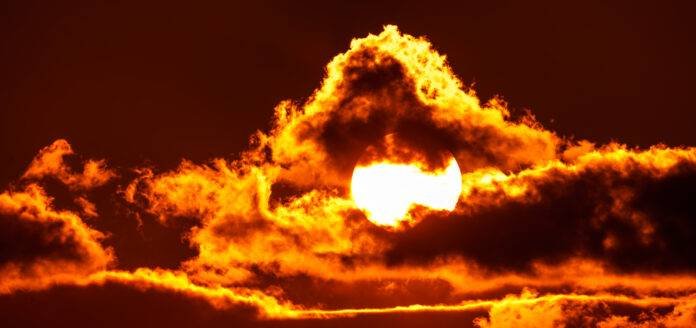
As temperatures in parts of the Western Cape and Namakwa District soared to record-breaking highs last month, a new scientific assessment is warning thatextreme heatis no longer a future threat in Southern Africa: it is becoming one of the region’smost dangerous public health and climate risks. After issuing a heatwave advisory on 8 March, the South African Weather Service confirmed that several stations across the Western Cape and Northern Cape had broken long-standing March records. Alexander Bay reached 44.8°C, Garies 43.5°C and parts of Cape Town climbed to nearly 40°C.
But the searing temperatures are not just an isolated weather event. According to a newconsensus studyby the Academy of Science of South Africa, funded by the department of science, technology and innovation, extreme heat is emerging as one of the most urgent andfast-escalating threatsfacing countries across the Southern African Development Community (SADC). The report is the first integrated regional assessment of how rising temperatures are affecting health systems, labour conditions, food security, urban environments and ecosystems across Southern Africa.
“Extreme heat is no longer a distant projection; it is alreadyreshaping the lived realitiesof millions of people across Southern Africa,” said ProfessorJerome Amir Singh, who chaired the expert panel behind the study. “This report highlights the urgency of strengthening heat-health preparedness and provides clear, evidence-based pathways for governments and communities to respond.” At the centre of the report is the idea of extreme heat as an “integrator hazard”, a climate threat that does not strike in isolation but amplifies a web of existing risks. Rising temperatures intensifydrought, increase wildfire risks, worsen air pollution and place additional stress on water, energy and health systems, disproportionately affecting vulnerable populations.
Read Full Article on Mail & Guardian
[paywall]
Global temperature trends underscore the urgency. Nineteen of the world’s 20 hottest years have occurred since 2000 andrecord-breaking monthly temperaturesnow occur five times more frequently than in the past. In SADC countries, the trends intersect with structural vulnerabilities including high levels ofoutdoor labour, rapid urbanisation and strained public-health systems.
Africa is warming faster than the global average and the report notes that many countries remain highly vulnerable because of poverty, inadequate infrastructure andpoor housing. In many low-income communities, homes built with heat-absorbing materials such as tin sheeting can become dangerously hot during extreme heat. The report noted that despite accounting for less than 1.3% of global emissions in 2010, SADC countries remain committed to both mitigation and adaptation, with a particular focus on practical strategies that can protect communities.
[/paywall]
All Zim News – Bringing you the latest news and updates.
