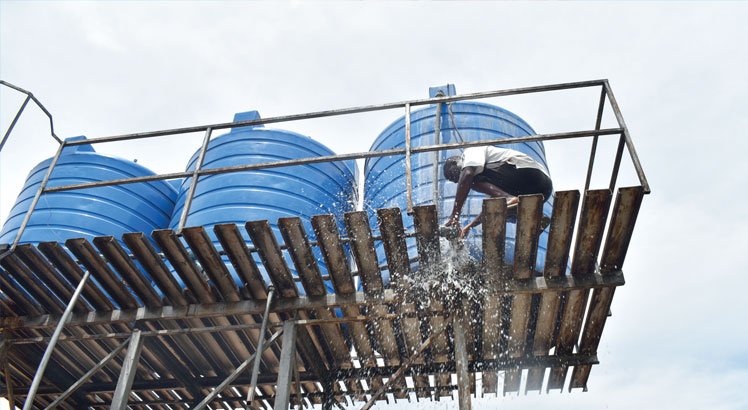
On a sweltering afternoon, two men climb corroded steel rungs to check whether three massive tanks at Dyeratu Primary School in Chikwawa District are supplying safe water to the learners, teachers and surrounding community. The locals are worried about their health and well-being following a toxic spill from PressCane Limited’s waste ponds in January. From the lofty climb, they pull the piping from tanks and rub off tar-like smears from the conduits’ mouths.
“Can you see this!” exclaims a dejected Lovemore Jambo, raising an index finger to show the sticky, blackish smear from the plastic pipes. “We rubbed off more of the same just four days ago.” Locals say the smear from water pipes starkly resembles the foul-smelling spill of the acidic wastewater that overflowed into their homes, farmlands and waterways—scorching crops, trees, shrubs and grass in its way. “Water is life,” says Patrick January, 60, from Lauji Village in the district.
“We need independent assessments as we increasingly see these impurities even at a communal borehole, about 200 metres from PressCanes’s waste ponds.” Headteacher Jackford Jeremiah says he is not confident that over 2 500 learners, 39 teachers and villages near Dyeratu Primary School are getting safe water. “The water from the taps looks pure, but how do you explain the sight of blackish smears and brownish stuff in the plastic pipes?” he asks. Chikwawa District Council installed the solar-powered water supply system in 2021 with support from Unicef to end fierce scrambles for erratic but costly piped water in the community dotted with hand pumps that supply saline water.
[paywall]
Women in the neighbourhood say they often see black impurities once the seemingly clean water from the communal taps settles. It appears that the pollution that forced the National Water Resources Authority (NWRA) to fine PressCane K40 million runs deep, endangering the environment and human health. However, the authority reports that “the groundwater source indicated conformity to standards” despite the pollution scandal also compelled Malawi Environmental Protection Agency (Mepa) to suspend PressCane operations pending remedial interventions.
The locals decried the delayed State response to nearly two decades of industrial waste spills. The National Water Resources Act of 2013 birthed NRWA to protect the country’s water resources.
[/paywall]
All Zim News – Bringing you the latest news and updates.
