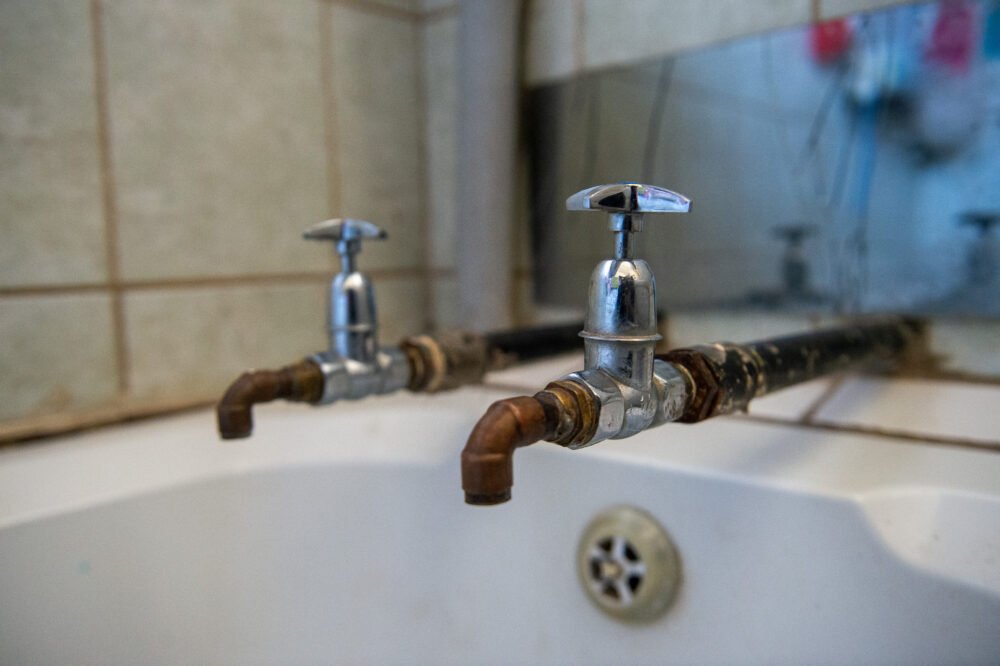
Recent water outages in Johannesburg are not just a municipal service delivery issue or infrastructural issue, as claimed but a deep systemic issue deeply rooted in the legacy of apartheid. During apartheid, urban planning deliberately prioritised white suburbs with robust infrastructure while Black townships received minimal investment. After 1994, the democratic government inherited these inequities.
Many townships and informal settlements continue to rely on poorly maintained systems, originally designed without long-term growth in mind. The result is the devastating water crisis Johannesburg faces today. In Melville, a middle-class suburb in Johannesburg, residents endured 24 days without running water, prompting a public briefing by Johannesburg Mayor Dada Morero and Johannesburg Water managing director Ntshavheni Mukwevho.
Officials attributed the disruption to high demand and aging infrastructure, revealing an erosion of state capacity and social trust. This signals the erosion of state capacity and social trust, where the routine failure of basic infrastructure normalises precarity and deepens inequality in post-apartheid urban life. Access to water was central to the democratic promise made in the National Water Act (NWA) of 1998.
Read Full Article on Mail & Guardian
[paywall]
The NWA centralises authority over water in the national government because it declares water as a public resource that should be held in trust by the state, rather than private property. The division of water into different categories, such as public water and private water, normal flow and surplus water, which existed under the 1956 Water Act, was done away with. All water thereafter had the same status in law.
This means that the privatisation of water is prohibited and all South African citizens have equal water rights. Moreover, the NWA gives the Minister of Water and Sanitation the power to regulate how water is allocated, used and protected. It requires users to obtain licenses for significant water use, allows the state to set limits and permits the withdrawal or suspension of rights if conditions are not met. For example, on Thursday, 19 February 2026, the minister of Water and Sanitation Pemmy Majodina announced that additional measures have been implemented to curb Johannesburg’s water crisis, including approval of Level 2 water restrictions in high-use areas, controlled throttling of water supplies overnight and a temporary abstraction licence allowing an additional 200 million cubic metres per annum to be allocated to Rand Water.
[/paywall]
All Zim News – Bringing you the latest news and updates.
