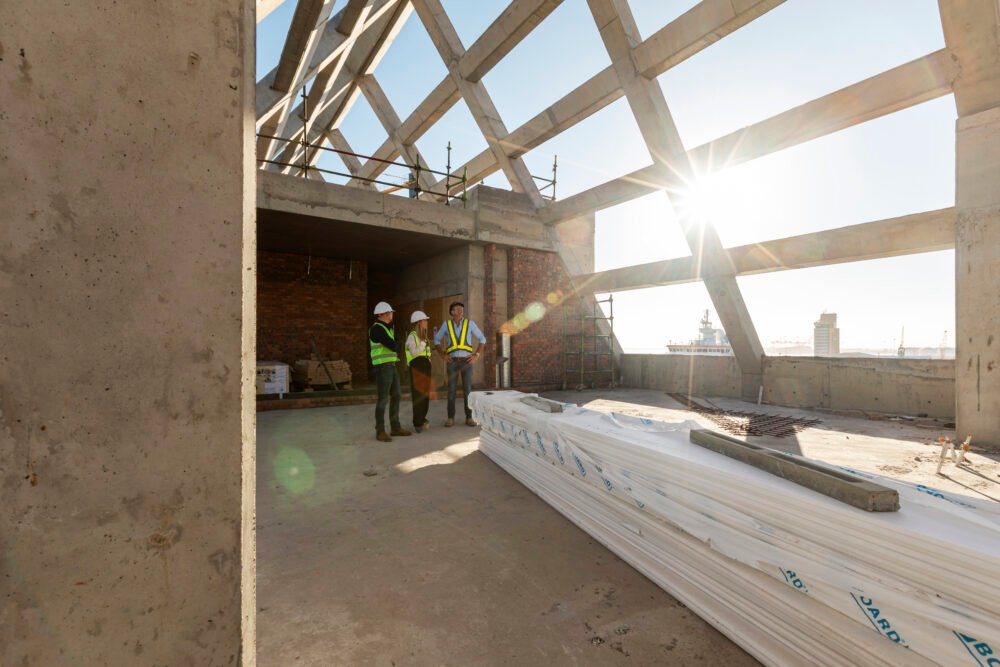
It is no secret thattourismunderpins a significant portion ofCape Town’ economy. This demand continues to drive the hospitality sector, evident in the steady pipeline of hotel developments across the city, alongside the much-debated explosion of Airbnb short-term rentals. The rapid growth ofAirbnbwithin the tourism sector demonstrates the agility of the short-stay market in outpacing the formal hotel sector in responding to market demand.
Some of the more notable and iconic hospitality developments are the upcoming 500-room Marriott Hotel Harbour Arch in the Foreshore precinct. The skyline is further evolving with One on Bree, which is under construction and set to become Cape Town’s second-tallest skyscraper with 505 hotel rooms. In Green Point, the R2 billion The Granger development, adjacent to the DHL Stadium, will include a 190-room hotel.
The luxurious R1.5bn Marriott Edition Hotel, Quay 7, is under construction at the V&A Waterfront and is set to be yet another landmark on the Cape Town hospitality scene. With so many exciting new builds and an influx of new keys hitting the market, my mind can’t help but ask: How is South Africa’s hospitality development sector keeping up with these international design standards? Is our building industry ready to respond to the rise of high-end development work in both the hospitality and residential sectors?
Read Full Article on Mail & Guardian
[paywall]
It’s one thing to be a desirable city for tourists and charge premium hotel room prices but the execution of the hospitality experience must match. With all the luxury international hotel brands flooding in and the influx of international visitors, the expectation for a world-class hospitality experience will increase, too. When contemplating the above, I decided to contact Johanna van der Merwe from TSL Group which consists of three interlinked design-driven businesses.
Its projects division, TSL Projects, has been appointed as the turn-key interior fit-out partner for the much-anticipated Marriott Edition Hotel in the Waterfront. This means it takes the design intent from the hotel group’s international designer and implements the concept here, using locally sourced products, which I love for our economy’s sake. Van der Merwe identifies a clear skills gap that needs to be addressed.
She notes that South Africa’s labour force, while understandably developing in certain areas, does not yet reflect the skill and experience typically found within construction environments in the US and Europe. Locally, the building industry largely follows a traditional construction model, where the primary focus remains on the construction phase, with interior fit-out either absorbed into the process or treated as an afterthought in the final stages. Van der Merwe believes that the traditional model should be split into two phases: one focused on the construction phase undertaken by the construction company and the other on fit-out. This is the model TSL is using for its Marriott Edition project at the Waterfront.
[/paywall]
