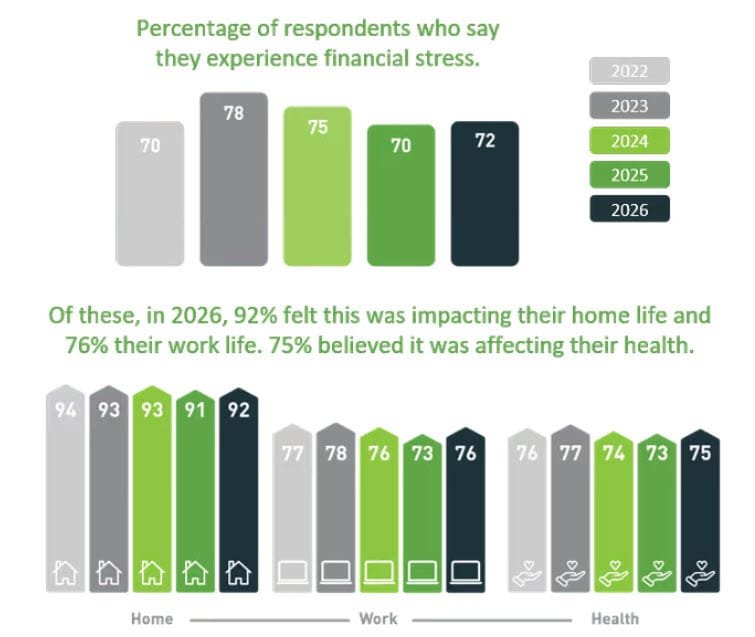
More than 70% of South Africans are experiencing severe financial anxiety, according to a major annual survey. The2026 Money-Stress Tracker, published by DebtBusters, has laid bare the mounting toll soaring everyday expenses take on families. Now in its fifth year, the study surveyed approximately 18 000 respondents, assessing how financial strain impacts health, home, and work life.
Data shows 72% of respondents admitted to experiencing money stress this year, reversing a previous decline from a peak of 78% in 2023. Crucially, the crisis has firmly breached the front door: home-life stress has surged to 42% – a jump of more than a third compared to 2025, and the highest level recorded since the tracker began in 2022. For the past two years, rising interest rates acted as the primary catalyst for domestic financial anxiety.
However, the 2026 data shows a dramatic shift towards short-term cost-of-living fears. The two most prominent anxieties reported this year are the dread of running out of money before the end of the month and the struggle to cover debt repayments. General worries about inflation and living costs rose by nearly a third, while anxiety surrounding electricity prices skyrocketed by 99% compared to 2025.
Read Full Article on The Witness
[paywall]
The relentless rise in everyday expenses has translated directly into severe debt repayment pressure. More than half of all respondents now allocate more than 40% of their take-home pay to servicing debt. Surprisingly, the heaviest debt burden is being carried by the middle class – specifically those earning more than R20 000 a month.
Executive head of DebtBusters Benay Sager noted that this specific demographic forms the backbone of the nation’s middle-class population, yet 75% spend over 30% of their net income on debt repayments. The survey highlights a shifting demographic landscape of anxiety, with younger citizens and lower-income earners emerging as the most stressed. Three-quarters of respondents under the age of 35 reported feeling anxious or stressed about their money.
Furthermore, financial anxiety among those aged 24 or younger jumped by 18% compared to last year, with this group expressing acute worry over living costs and clearing their debt. In line with historical trends from the tracker, women continue to experience significantly higher levels of financial stress than men. Women scored higher across seven of the survey’s eight core areas of concern, with retirement being the sole exception.
Analysts suggest this is because women tend to prioritise – and are expected to prioritise – immediate household needs. Consequently, home-life stress for women has also reached a five-year peak. The proportion of respondents experiencing every single one of these indicators was higher this year than in 2025. Psychologist Andrea Kellerman warned that the sharp spike in home-life stress is deeply concerning, as it signals that financial strain has fully infiltrated the domestic sanctuary.
[/paywall]
All Zim News – Bringing you the latest news and updates.
