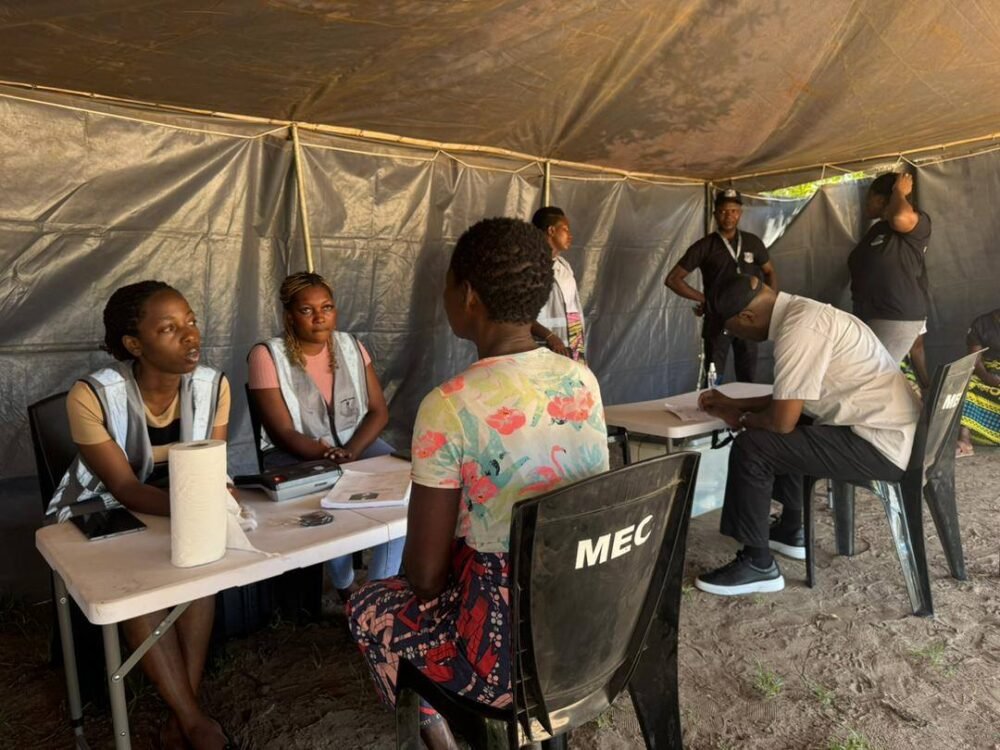
Malawi’s latest contest over the independence of its election referee is playing out not at the ballot box but in court. The Malawi Electoral Commission (MEC) has approached the high court to challenge a presidential order that would move its headquarters from the capital, Lilongwe, to Blantyre within three months. At issue is whether President Arthur Peter Mutharika can, by decree, direct an independent commission’s operational choices.
For a small, aid-dependent democracy confronting debt distress, climate shocks and shifting geopolitics, the outcome will be watched well beyond Malawi’s borders. On 10 October 2025, Mutharika signed Executive Order No 01 of 2025, instructing several state bodies to move: MEC, the Malawi Communications Regulatory Authority (MACRA) and the Malawi Housing Corporation (MHC) to Blantyre, and the Malawi Prison Service (MPS) to Zomba. The chief secretary was told to coordinate; the treasury to fund.
Most have complied: MACRA and MHC shifted, and MPS, which previously moved from Zomba to Lilongwe, is slated to return south. MEC is the outlier. In a public notice dated 28 January 2026, MEC said it had filed for judicial review, arguing that the directive trespasses on its constitutional and statutory independence.
Read Full Article on Mail & Guardian
[paywall]
Malawi’s constitution requires an electoral commission “independent of any external authority” and recognises MEC as a corporate body able to own property and sue and be sued. MEC’s case hinges on section 76(4) of the constitution and section 6(1) of the Malawi Electoral Commission Act, which underpin the view that decisions such as where the commission sits cannot be dictated unilaterally by the executive. Civil society pushed back when the order was issued.
The Centre for Social Concern and Transparency (CSAT) and the National Advocacy Platform (NAP) condemned the relocations as costly and ill-timed. NAP chairperson Benedicto Kondowe said the decision carries “significant governance, economic and political implications”. While the goal of regional balance is “commendable”, he argued, regulators such as MACRA rely on proximity to central ministries, Parliament and diplomatic missions concentrated in Lilongwe.
This is not a mere question of postcodes. MEC’s 2023–28 strategic plan moved its HQ from Blantyre to Lilongwe, closer to ministries, Parliament, the police and the justice sector clustered at Capital Hill, to cut travel and coordination costs. Reversing that shift could inflate logistics and engagement costs just as election budgets lean on external financing from the EU, UNDP and regional bodies such as Comesa and the African Union.
The timing is combustible. Malawi held a general election on 16 September 2025 and only recently completed the handover of polling records to Parliament, a prelude to petitions and reform debates. Any impression of renewed presidential leverage over MEC now risks eroding trust among opposition parties, civil society and donors preparing to bankroll the next cycle.
[/paywall]
All Zim News – Bringing you the latest news and updates.
