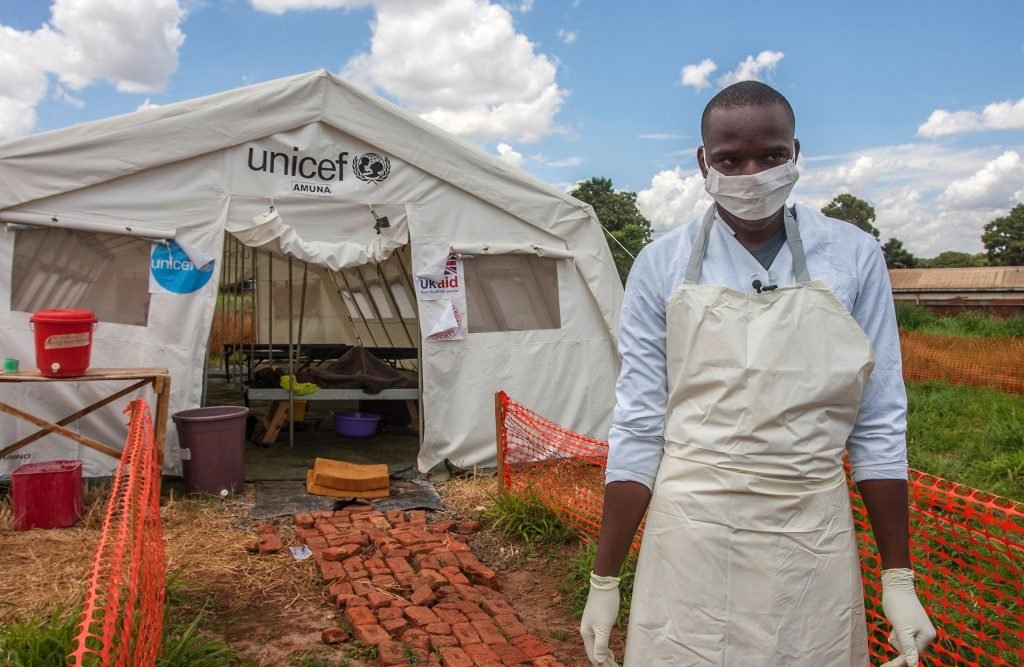
Cholera has become a seasonal killer in one of Blantyre City’s clustered settlements, marked with blocked drains, leaking pit latrines, soiled diapers discarded in open spaces, pit latrines emptied into waterways and streams turned into dumpsites. In the populous Chilomoni Township, foul-smelling wastewater snakes between crowded homesteads on the way to the nearest stream. For resident Aida George, 26, cholera, which has claimed a life in Chilomoni, hit days after drawing water from a neighbour’s shallow well.
“The water looked clear, but…,” she stutters to a pause in an interview at her home in Mulunguzi area. George was cooking supper for her family of four when vomiting and diarrhoea hit her. Neighbours carried her on a bicycle to Chilomoni Health Centre cholera treatment camp, where she was discharged after four days.
“I was weak and severely dehydrated,” she recalls. “I hastated to seek treatment because the diarrhoea was slow.” In the next bed lay John Chikwelekwese, 48, a Michiru Mountain conservation volunteer. “The disease took me by surprise as I was waiting for supper after a hectic day of guarding the plundered mountain and doing piecework to feed my family,” he narrates.
[paywall]
He recalls that the diarrhoeal disease hit him around 3am. Chilomoni has become a cholera hotspot in Blantyre, with the treatment camp receiving over a dozen of cases from Mulunguzi. Bucket line the floor.
Chlorines hung in the air. Caregivers moved from bed to bed, hanging IV drips and providing other life-saving services. “I feared death,” says George.
“I thought of my two children. Who would cook and care for them if I die?” Chikwelekwese says the disease, which is prevented through safe water, sanitation and hygiene, reduces an adult to a child. In Mulunguzi settlement, overflowing pit latrines drip into gullies and streams where children play.
[/paywall]
All Zim News – Bringing you the latest news and updates.
