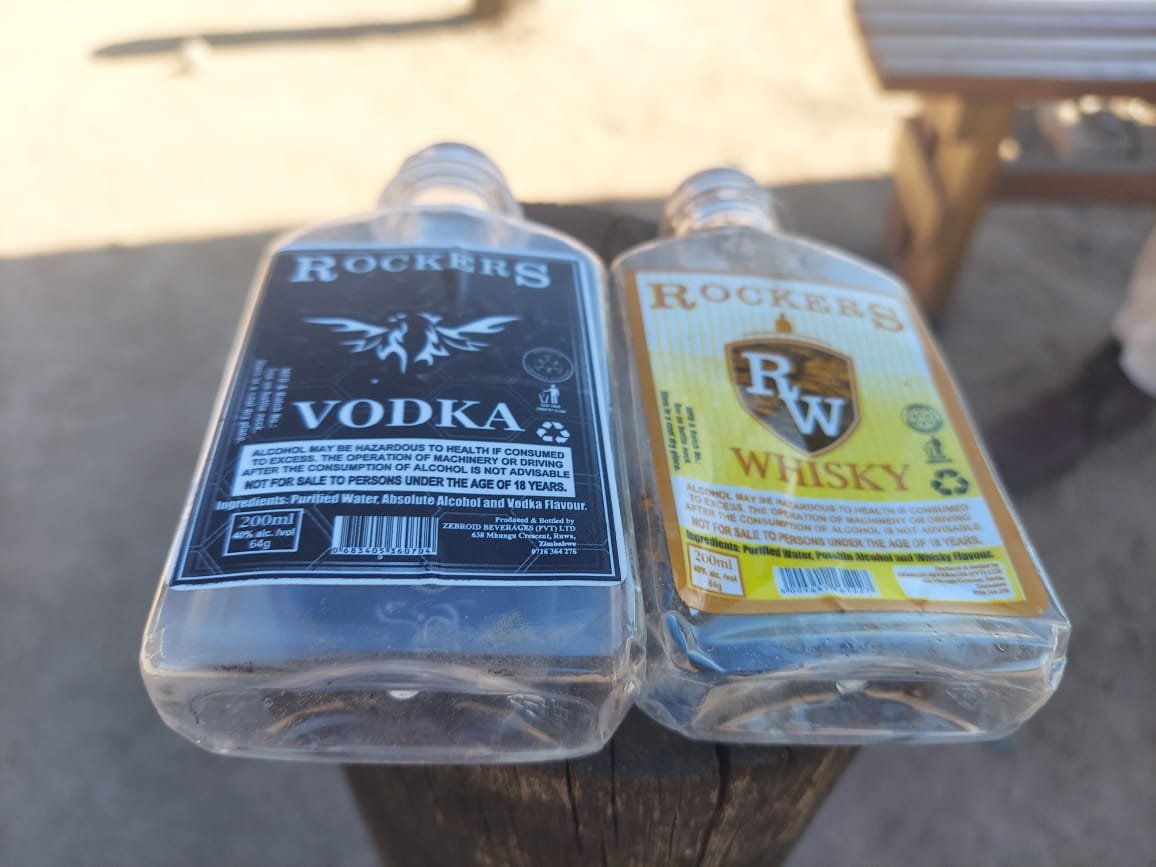
At Mbare’s Materereni Flats in Harare, Paradzai Chindoko, a middle-aged man, swayed unsteadily before collapsing onto the ground, his laughter echoing along the busy street. In his hand, he clutches a small plastic bottle of an illicit alcohol, bought for US$0,50. For him, and many like him, this potent concoction offers a quick escape from poverty and hunger.
“I just needed something to make me forget my troubles,” Chindoko mutters, his speech slurred, as onlookers shake their heads. Traders and residents said the scene has become all too familiar. Almost every day, men, and increasingly young people, gather in the neighbourhood where the illicit brew is sold discreetly by vendors.
The business thrives as it is cheaper and more accessible than licensed beer. “You can buy a bottle for half a dollar and it’s enough to knock someone out. It’s killing our people slowly,” said one vendor outside Materereni Flats.
[paywall]
As dusk settles, the man remains slumped by the wall, a living reminder of how the flourishing illicit alcohol trade is tearing through Zimbabwe, one bottle at a time. Across town, in Highfield Tendai Mazwi sits outside his parents’ home and at 34, he looks much older than his age, his face marked by years of hard drinking. Mazwi recalls the bitter sachets of alcohol he bought for as little as US$0,50 on street corners and bottle stores, the same drinks that nearly destroyed his health and his marriage.
“I thought I was just saving money,” he said softly. “But those bottles cost me everything, my job, my family, my dignity.” Mazwi and Chindokoi’s stories capture the hidden price of Zimbabwe’s booming trade in illicit alcohol, a cocktail of financial losses for the state and legitimate brewers, windfall profits for backyard producers and underground retailers, as well as well as a rising toll on health and families. The illicit brew market is no longer just a backyard hustle, it has mutated into a million-dollar shadow economy run by cartels, investigations carried by CITE have revealed.
[/paywall]
