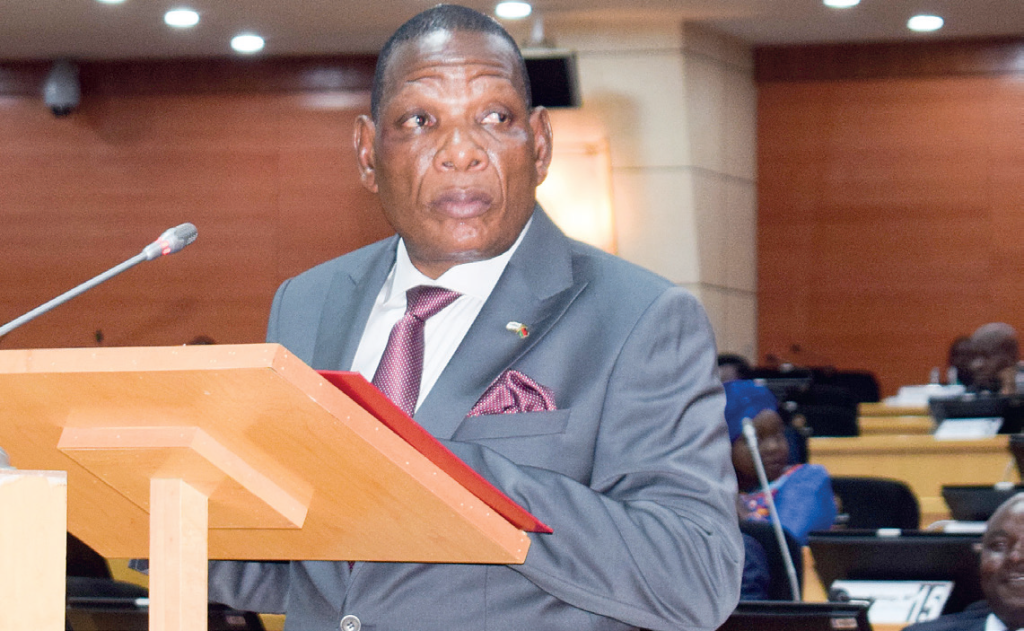
Centre for Social Concern (CfSC) has cautioned that while the proposed K11 trillion 2026/27 National Budget signals strong intent to protect social sectors, its ability to meaningfully reduce inequality will depend on whether allocations translate into improved service delivery for the vulnerable populations. The fiscal plan presented by Minister of Finance, Economic Planning and Decentralisation Joseph Mwanamvekha in Parliament in Lilongwe on Friday projects a fiscal deficit of nine percent of gross domestic product (GDP) in the fiscal year that starts on April 1 from 11.9 percent in the current fiscal year as government seeks to stabilise an economy burdened by public debt of K23.9 trillion, equivalent to 90.9 percent of GDP. Interest payments alone are expected to consume K2.793 trillion in the next fiscal year.
Within the constrained framework, health receives K1.02 trillion, about 9.3 percent of total expenditure while agriculture is allocated K931.1 billion, roughly 8.5 percent. The expanded Constituency Development Fund accounts for K1.145 trillion, more than 10 percent of total spending. Allocation to education include K47.6 billion for free primary and secondary schooling and K42 billion for student loan.
In an interview on Saturday, CfSC economic governance officer Agness Nyirongo said the allocations demonstrate recognition that human capital development is central to reducing poverty. She said: “The proposed budget demonstrates a clear commitment to social sector spending, particularly in health and education. “Allocations towards free primary and secondary education, student loans and public health services reflect recognition that human capital development is central to reducing poverty and inequality.” However, Nyirongo warned that funding levels alone do not guarantee impact.
[paywall]
“Whether these allocations meaningfully reduce inequality depends on their adequacy and effectiveness,” she said. Nyirongo added that a stronger expansion of social protection programme could have reinforced the budget’s people-centred character. “These measures provide immediate relief to households facing economic hardship and complement long-term investments in education and health,” she said, calling for greater emphasis on employment creation and improved accountability in decentralised funding. While social advocates focus on distribution and adequacy, economists are examining the macroeconomic credibility underpinning the fiscal plan.
[/paywall]
All Zim News – Bringing you the latest news and updates.
