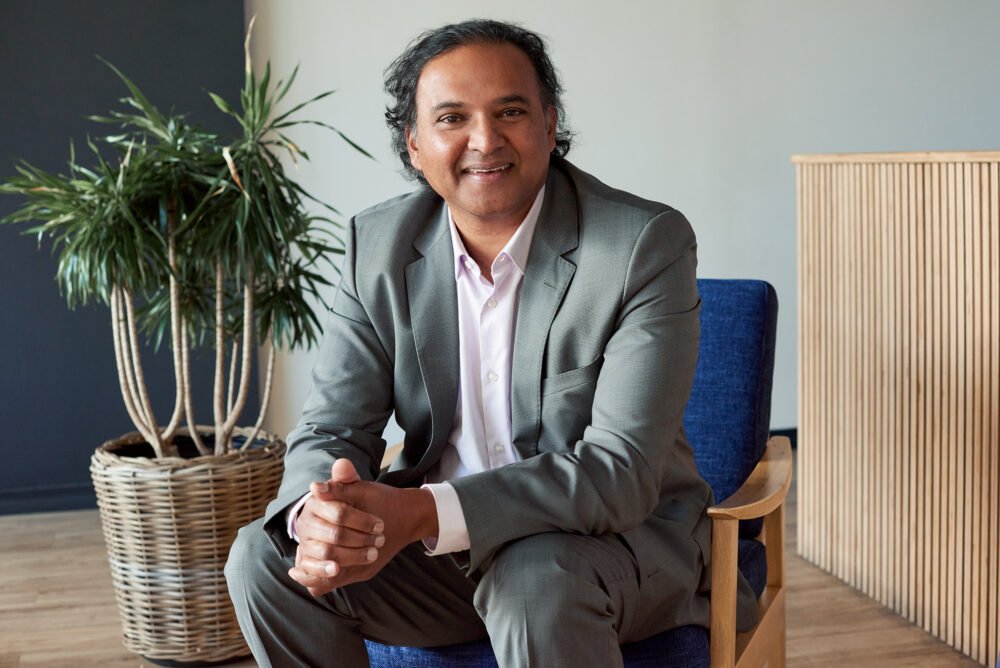
The old MBA is dead. Or at least it should be, according to Milpark Business School. Under the leadership of director Segran Nair, the school has rebuilt its MBA from the ground up to tackle the real, messy complexity of today’s business landscape.
Climate uncertainty, economic volatility, digital disruption and social inequality demand a new kind of leadership that is rooted in ethics, adaptability and systems thinking. “The challenges facing today’s business leaders are anything but straightforward, and we redesigned our MBA programme deliberately,” Nair explains. “And not just for subjects in isolation, but around the real-world systems leaders must learn to navigate.” While traditional MBAs are often criticised for their rigid, siloed structures, Milpark has overhauled its programme, weaving together ethics, sustainability, finance and technology into a single, integrated journey.
One example is the Leading an Organisation Responsibly module. Structured over 20 weeks, the course includes 10 weeks of intensive theoretical engagement followed by 10 weeks of real-world application. The MBA has been one of the world’s most recognised business qualifications for more than a century, and for some, that’s exactly the problem.
Read Full Article on Mail & Guardian
[paywall]
As global challenges mount and digital disruption accelerates, many are questioning whether it’s still fit for purpose, with critics arguing that it’s too focused on Western capitalist models, too out of touch with the social and environmental imperatives of our time and too rigid to meet the needs of today’s working professionals. But Nair pushes back. “The MBA today is not what it was even 10 years ago — at least not at institutions that are paying attention,” he says.
“The complexity of our modern programme — from operations and marketing to ethics and leadership — is unlike anything else. It’s not just about business knowledge. It’s about transformation.” So is the qualification still relevant?
According to Nair, the answer is a resounding yes — but only if it evolves “in both content and context to stay meaningful for the world we live and work in today”. This approach reflects a deliberate effort to foster systems thinking and integrated problem-solving. Milpark’s redesigned curriculum encourages students to draw from multiple disciplines and consider the broader implications of business decisions.
He says Milpark’s programme addresses South Africa’s urgent need for ethical and innovative leaders: “Look at our challenges: high youth unemployment, a fragile economy, infrastructure strain and leadership crises. We need professionals who are numerate, ethical and strategically agile. The MBA remains one of the best tools to build those capabilities — if done right.” With artificial intelligence (AI) transforming industries, Nair adds that technology cannot be an afterthought.
At Milpark Education, students are empowered to use emerging technologies ethically and responsibly without losing their uniquely human advantage. And although tools like ChatGPT are prohibited in certain assessments to ensure authentic and critical thinking, students are trained to engage with AI-generated content.
[/paywall]
