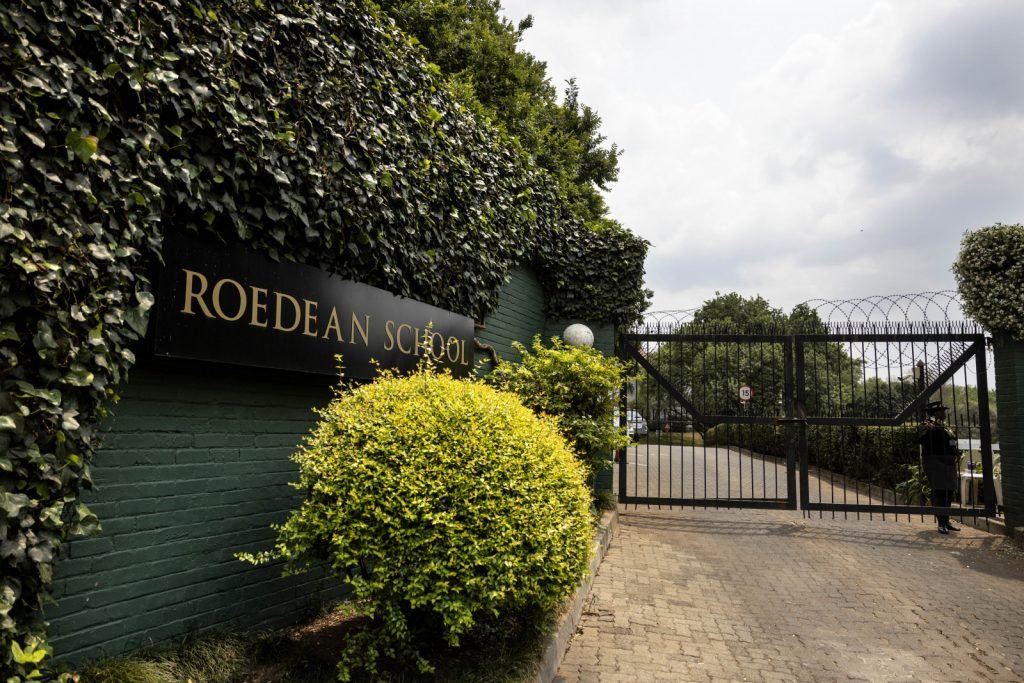
In South Africa, “apolitical” is not a neutral position. It is the luxury of those who are insulated from the consequences of political violence, racialised inequality, and global power. In a society still structured by the long shadow of apartheid, neutrality functions not as innocence but as preservation.
Roedean is among the most expensive schools in the country. It serves families with extraordinary economic and social capital. To present such a space as detached from politics is disingenuous.
Elite schooling is not an escape from society; it is one of the sites where society reproduces itself. Let me be clear from the outset: this is not about antisemitism. No Jewish learner should ever be targeted, excluded, or made unsafe because of their identity.
Read Full Article on Mail & Guardian
[paywall]
That principle is non-negotiable. The issue at stake is not Jewishness, but how institutions respond when students raise moral questions about ideology, militarism, power, and injustice in the world they are inheriting. Theleaked voicemailbetween a Roedean staff member and a representative of King David School is instructive, not because it proves malice, but because it reveals a framework.
In that call, the Roedean caller explains that the school is “facing a bit of pressure from our community and our constituents regarding just not playing against King David,” adding that “what’s happening out in society is now affecting us at a school level.” The problem, as she frames it, is not ethical disagreement but inconvenience — the intrusion of politics into the smooth functioning of elite school sport. Rather than sitting with students, asking what they are grappling with, or guiding them through complexity, the instinct was to turn outward, seeking advice from the very institution the students were objecting to, effectively asking how to manage dissent. That is not leadership but narrative control.
It reflects a familiar pattern in elite white institutions: when confronted with discomfort, authority manages upward, protecting reputation and calm rather than engaging young people as moral agents. The caller repeatedly emphasises that she must “remind them that schools are apolitical.” What is also deeply revealing is how quickly she frames the objection as a matter of Jewish identity rather than political critique. She states, “at the moment, it’s presenting itself as a Jewish day school issue,” and later asks, “so what are your parents objecting to us playing you?” In doing so, she collapses a political and ethical objection into a question of Jewishness.
This suggests little reflection on what students are actually saying and why. In a country like South Africa — and in a school that claims to cultivate critical, ethically aware young people — it is alarming that a senior educator appears unable, or unwilling, to hold a basic distinction between Jewishness as identity and faith, and Zionism as a political ideology and institutional allegiance. Roedean is not an abstract space.
It is one of the most elite schools in the country. The conditions that allow a school to claim neutrality — safety, wealth, insulation from violence — are themselves political outcomes. To refuse a stance is, in practice, to take one: prioritising calm and reputation over ethical engagement.
At a school where annual fees run into hundreds of thousands of rand, parents are not paying for reputational management but for moral and intellectual leadership. When questions of justice are outsourced to public relations firms instead of being held by educators, something has gone wrong. Moral formation is the work of teachers, not spin doctors.
This matters because the students’ discomfort did not arise in a vacuum. King David Schools do not claim neutrality. Their own institutional documents describe Jewish education as inseparable from Zionist education and affirm the centrality of the State of Israel.
Parents and learners are required to sign acceptance of this framework. One may defend this position, but it cannot honestly be described as apolitical. King David’s own Code of Conduct states this explicitly
[/paywall]
All Zim News – Bringing you the latest news and updates.
