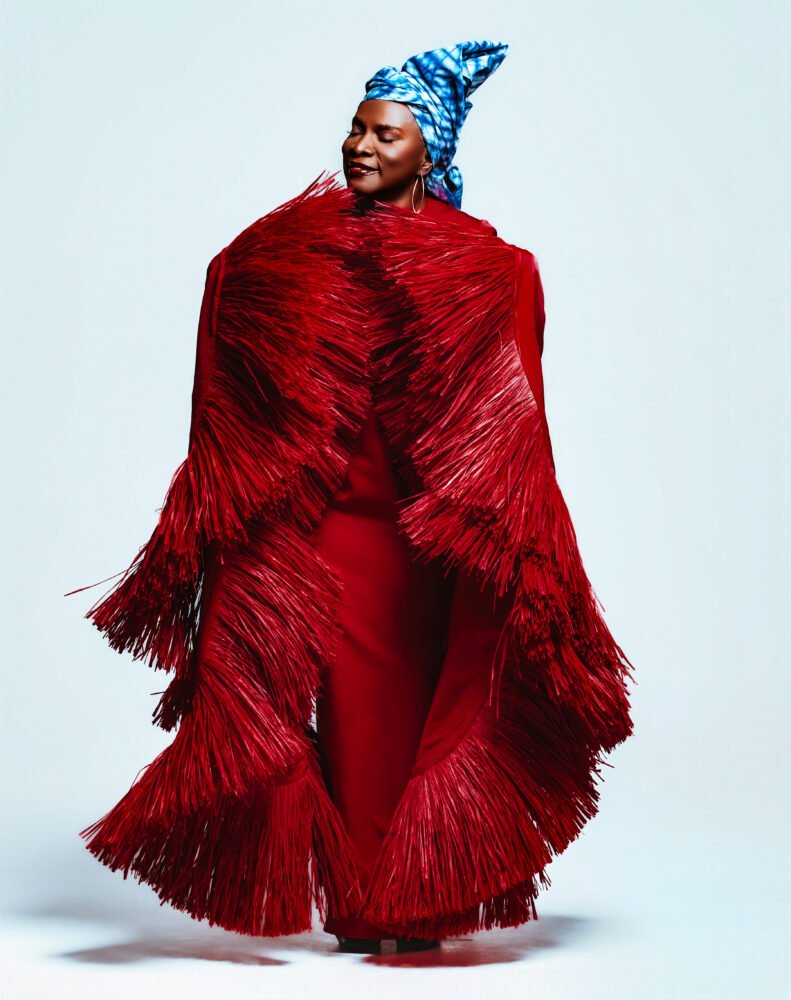
It’s on songs likeI’m On Fire, an uptempo dance tune in which Angélique Kidjo evokes the spirit of Fela Kuti with the help of Nigerian highlife duo The Cavemen, that you appreciate the breadth and depth of Kidjo’s musical palette. The song comes roughly halfway throughHOPE!!, a 16-track album that sees the Beninese legend going everywhere from Atlanta to Kinshasa and Rio de Janeiro to Johannesburg in search of sonic building blocks. At the age of 65, you’d be forgiven for thinking Kidjo might feel she’s said and done enough but the acclaimed singer shows no signs of slowing down.
She has performance dates lined up across Europe with stops in England, France, Germany, Italy, Ireland, Poland and Switzerland between May and November. I first got the chanceto see her performat the Culture Summit in Abu Dhabi last year where she turned a formal TED-styled conference into a Coachella-esque concert in the desert. HOPE!!is an album that comes four decades deep into one of the most decorated careers of any African musician and contains much of the grounded versatility that has taken Kidjo to stages across the world.
It also arrives at a moment shaped by personal loss and reflection, with the death of her mother becoming a quiet but persistent presence throughout the project. “This album was in the making since the release ofMother Nature,” she says, referring to her 2021 album. “And I haven’t done anything because in the meantime, my mom passed away.
Read Full Article on Mail & Guardian
[paywall]
So I paused a lot of things to grieve.” Creating the album became part of the grieving process for Kidjo: “I promised my mom I would record my own version ofMalaikabecause she would always ask me to sing it for her before she died, but for a long time I couldn’t do it,” she explains. “So I said I have to do a whole album to fulfill this promise that I made to my mom. And somehow I did with this album.
She has been somehow all the way guiding me to everything that I do. That’s the feeling that I have because I felt her presence completely throughout this album.” That sense of presence is most clearly felt on the album’s closing track, a sweeping orchestral version of Malaika featuring French singer Florent Pagny. The song itself carries a long history.
Written by Tanzanian composer Adam Salim in 1945 and later recorded by Kenyan musician Fadhili William, it has become closely associated with Miriam Makeba, whose rendition introduced it to global audiences. Kidjo’s version honours that lineage while adding her own emotional imprint, moving between the original Swahili lyrics and a new set of lyrics in French. Elsewhere, the album moves with a restless sense of curiosity.
Its collaborations stretch across continents and genres but they are held together by a clear sense of purpose that Kidjo returns to repeatedly when she talks about her work. “For me, it’s always about the song. I’m always at the service of the song,” she says.
“My music is not for me to keep. I grew up with the philosophy from my parents that when you surround yourself with people to talk about something that is meaningful, it’s more powerful. The message is delivered more powerfully.”
[/paywall]
All Zim News – Bringing you the latest news and updates.
