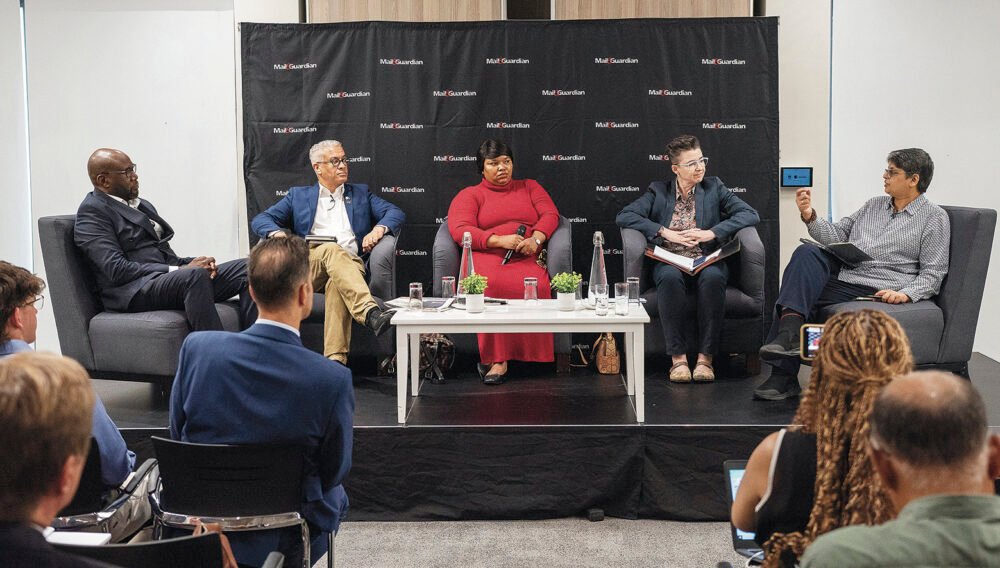
Opening the event, Gregor Jaecke, Resident Representative of the Konrad-Adenauer-Stiftung in South Africa, described the platform as evidence of “a vibrant and strong democracy”. In a global environment where democratic norms are under pressure, he said, such spaces for open debate should not be taken for granted. Ireland’s ambassador to South Africa, Austin Gormley, said Sona remains “a great opportunity for debate and exchange”, reflecting the vitality of engagement between government, media and civil society.
The panel turned quickly to the substance of President Cyril Ramaphosa’s address. Sanusha Naidu, senior research associate at the Institute for Global Dialogue, framed the discussion within the context of local government elections and deepening service delivery crises. The president, she said, “could not shield government from the level of crises that exists” in municipalities, particularly in relation to water provision and infrastructure management.
While the address touched on the water crisis, gangsterism, organised crime and collaboration between the South African Police Service and the South African National Defence Force, Naidu questioned how these commitments would translate into measurable change. “How does it become actionable?” she asked. The announcement of new agencies and oversight mechanisms, including water infrastructure interventions, must be matched by capacity and accountability.
Read Full Article on Mail & Guardian
[paywall]
She cautioned against the routine creation of commissions and task teams in response to structural problems. “Let’s have another commission,” she said, capturing what she described as a pattern of institutional layering without sufficient reform. Urbanisation pressures, demographic shifts and infrastructure strain require long-term planning and technical competence.
Without that foundation, interventions risk addressing symptoms rather than causes. Naidu also reflected on the political economy of local governance. Municipal structures, she argued, have in some instances become sites of patronage.
The challenge is not confined to one political party. “It’s not just an ANC problem,” she said, noting that governance failures cut across the political spectrum. In an election year, performance at local level will shape public trust in national commitments.
Prof Christi van der Westhuizen, professor of sociology at the University of the Western Cape, shifted the focus to poverty, social protection and structural unemployment. South Africa’s labour market crisis, she said, is not cyclical. “There’s a structural problem in our economy that people can’t actually find jobs,” she said.
Growth rates remain too low to absorb those excluded from formal employment. The child support grant, she added, remains insufficient to address food poverty in many households. Fiscal discipline must be balanced against the social realities confronting vulnerable communities.
[/paywall]
All Zim News – Bringing you the latest news and updates.
