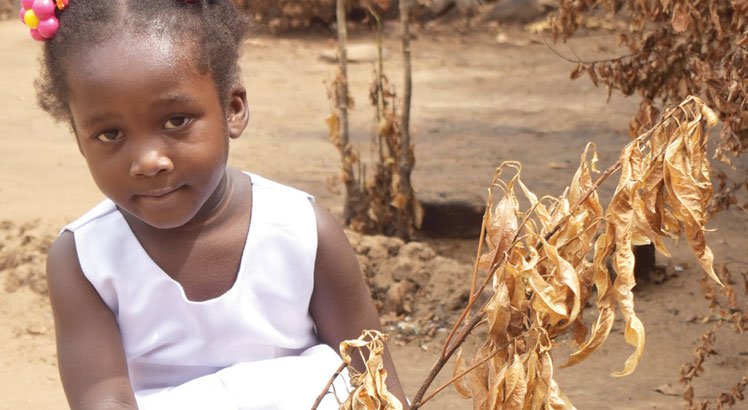
Watipatsa Manyozo’s home at Dyeratu in Chikwawa District had many trees to smile about. However, the five-year-old’s smile faded into sorrow on January 20 2026 when PressCane Limited’s toxic ethanol waste spilled from the company’s ponds into surrounding settlements, farmlands and waterways. What a scientist and water quality regulators termed acidic waste scorched all trees in the five-year-old girl’s homestead, including her favourite that she watered every morning before going to preschool.
“I planted these trees to beautify our home, but Wati loved a soldier tree the most,” says George Manyozo. “She watered it every morning after brushing her teeth.” The girl expected the tree to grow big, shading the family of six and visitors from the floodplain’s sweltering sunshine. However, it wilted within two days as the tar-like ethanol waste killed every green plant in its way.
Watipatsa still waters the dead tree, hoping it will come back to life, but it only dims her joy. The father of four says the last-born looks depressed by “the futile wait to see the trees and flowers sprout again.” “ How do I tell her that the tree will not rise again,” he asks. The spill has killed trees, hedges, pasture and flowers in villages near the nine waste ponds.
[paywall]
Within days, it degraded Manyozo’s fenced residence, once the village’s greenest space, to a brownish dryland. “That day, around 4am, children woke up to stinking water in their bedroom. The fence was swamped and all green things dried up within days,” he narrates.
The spill also ruined the beddings, clothes, sofas and other valuable goods. “It reached a knee high within an hour, leaving my feet burning and itching. In no time, every plant in its way was dead, the cement floor was cracking and the brick walls were eroded,” Manyozo laments. The tragedy replicates itself across the rural community, where Patrick Mpinganjira’s homestead lost about 30 trees.
[/paywall]
All Zim News – Bringing you the latest news and updates.
