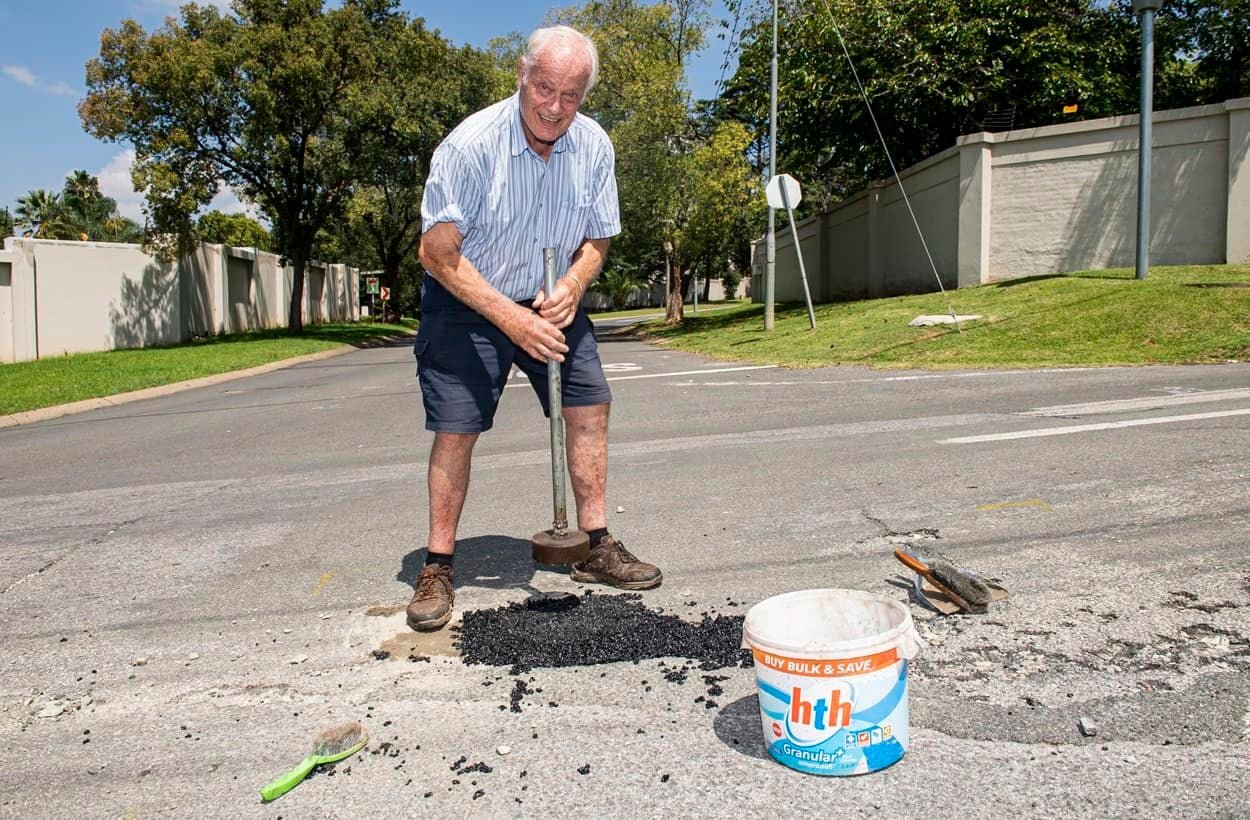
Rainer Dixel, a retired engineer, fixes potholes in his street in Bryanston. Dixel took the initiative after the owner of petrol station asked him to fix potholes near his business. Picture: Gallo Images Imagine a State of the Nation Address (Sona) delivered without triumph or ceremony.
The president rises, not to announce renewal, but to offer thanks. He thanks households for installing solar panels that kept the lights on when the grid failed. He thanks parents who found ways to send their children to private schools as public classrooms became more crowded and less reliable.
He thanks communities that drilled wells when taps ran dry and businesses that paved roads, fixed wells, installed street lights and hired private security as police retreated. That moment would not feel like a rupture. It would feel familiar because South Africa has been living with this logic for some time now, even if it has never been spoken so plainly.
Read Full Article on The Citizen
[paywall]
The country is not marked by sudden collapse, but by a slow recalibration of expectation. What once provoked outrage is now met with adjustment. The absence has been normalised, and coping has replaced demanding.
Private substitution is often celebrated as resilience. Households are praised for their ingenuity. Businesses are applauded for acting where the state cannot. Communities are encouraged to be self-reliant.
[/paywall]
All Zim News – Bringing you the latest news and updates.
