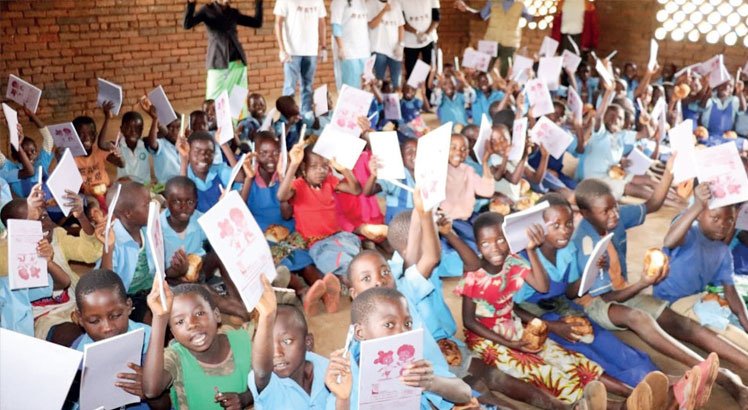
On a cool morning at Nsanjiko Primary School in Lilongwe, Standard Six girl Jane, 11, sits in a crowded classroom, a new notebook in hand. For the first time in months, she does not have to borrow a page from a friend’s notebook or sit through lessons unable to write. “I didn’t have a notebook or pen,” she says, opening the new notebook.
“This came just in time.” About 80 percent of Malawians live below the poverty line pegged at $3 per day, reports the World Bank. Widespread poverty, hunger, lack of learning materials and unstable households haunt poor children long before examinationsdetermine outcomes. In rural communities such asNsanjiko, the school day often begins with lack of basics.
“Sometimes, we come to school hungry,” says Nsanjiko Secondary School Form Three student Falison Mathews, 14. Chronic hunger fuels malnutrition, stunting a third of Malawian children under five. The shadow of early deprivation follows children into adulthood, slowing their growth, learning and productivity.
[paywall]
Over 800 primary school pupils and 27 secondary school students received notebooks and pens under the targeted family strengthening programme. “Education is not just a resource, but a right. Together, we are making it accessible for all,” said Mata chairperson Pappu Rao after presenting the donation, estimated at K8.65 million.
The country has expanded access to basic education since the abolishment of school fees in 1995. However, it is grappling to turn rising enrolment into meaningful learning amid low completion rates and uneven learning outcomes, particularly low in rural areas where most Malawians live in poverty.
[/paywall]
All Zim News – Bringing you the latest news and updates.
