Source: CITE
THE future of Mavuradonha Wilderness, one of post-independence Zimbabwe’s conservation success stories, is in grave danger due to unregulated chrome mining activities by Chinese entities, investigations have revealed.
The foreign miners are being shielded by heavyweights in Mashonaland Central, who are wantonly disregarding the government’s 2020 ban on mining activities in all national parks.
Located near the towns of Guruve and Centenary, Mavuradonha covers 600 square kilometres of the eastern part of the Zambezi escarpment. It was declared a monument by the government in 2017 because of its historical and cultural importance.
Mavuradonha is also renowned for its rich biodiversity comprising 229 bird species, including several large eagles, and 41 species of large and medium sized mammals.
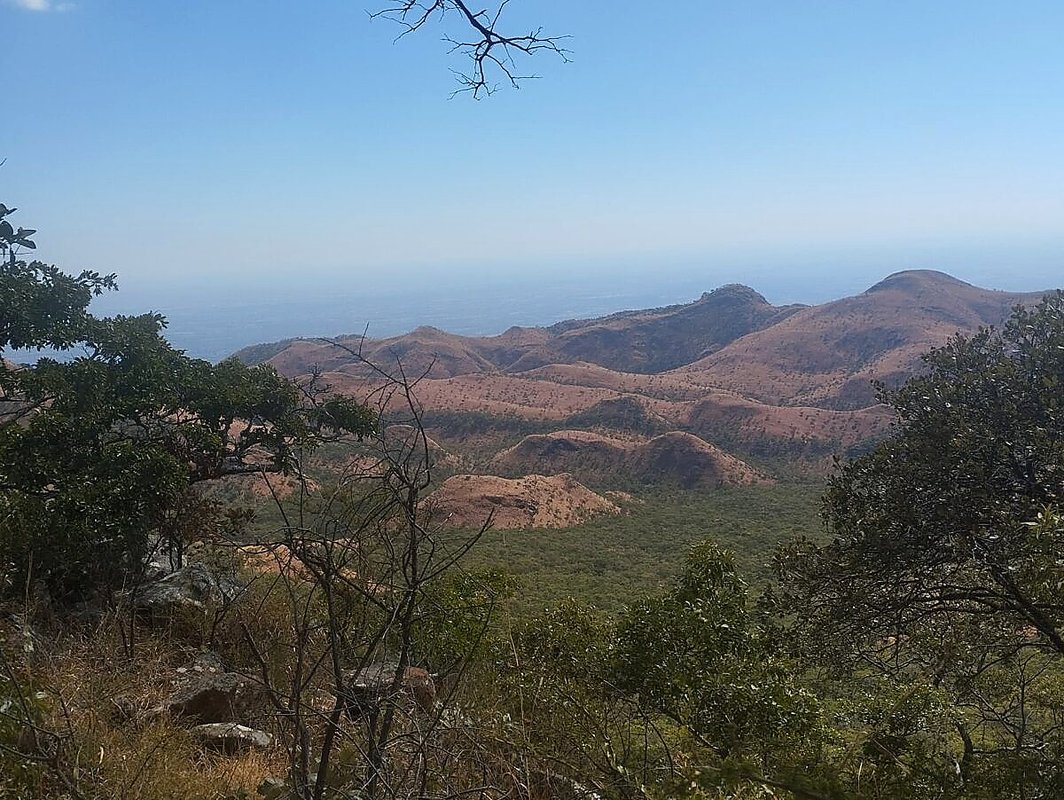
The undisturbed part of the Mavuradonha Wilderness showing a glimpse of the natural wonder.
In 1988 it was declared a protected area by the government through the Muzarabani Rural District Council (RDC) in recognition of its scenic beauty and conservation value.
The nature reserve was one of the success stories of the Communal Areas Management Programme for Indigenous Resources (CAMPFIRE), whose objective was to ensure that local communities derived direct benefits from natural resources in their areas.
Mavuradonha also boasts of numerous historical and cultural sites, including San rock art and Mutota’s Kraal ruins, which makes it a potential tourism magnet for Zimbabwe.
Over the years, however, encroaching mining activities have been destroying the pristine environment and investigations by CITE exposed how some Chinese companies are being allowed to plunder Mavuradonha with impunity with the aid of officials from institutions that should be protecting the reserve.
The Chinese miners have opened roads deep inside the nature reserve, disturbing the wildlife and causing serious damage to the environment.
The groundwork for the destruction of the reserve was laid on July 7, 2015 when the Muzarabani RDC signed a memorandum of understanding (MOU) with Afrochine Smelting, a subsidiary of China’s second-biggest stainless steel products manufacturer, the Tsingshan Group, to explore for chrome.
This was despite the fact that the authorities had embarked on a process to push for Mavuradonha to be declared a World Heritage Site. It was also a few years after the Muzarabani RDC signed an agreement with a private company to spruce up the wilderness.
A 2012 agreement with Nzou Safaris was meant to facilitate the restoration of the nature reserve to its past glory to attract tourists and help the local community benefit from rich natural resources in their area.
The MOU with Afrochine appears to have opened the floodgates for other Chinese-owned companies to invade the reserve as two others, namely Labenmon Investments and Alaska, had joined the scramble for chrome at Mavuradonha by 2019.
A game ranger at the Mavhuradonha Wilderness is seen standing in one of the areas where mining operations have led to serious land degradation.
