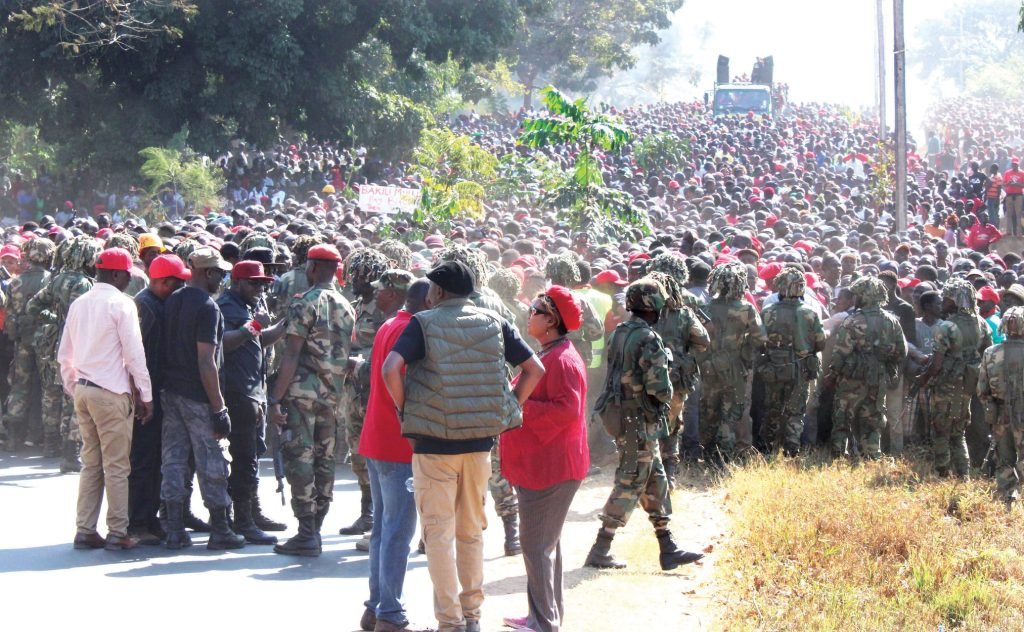
Political infiltration, shrinking donor support and the rise of “mercenary” civil society organisations are eroding Malawi’s civic space, weakening one of democracy’s most important checks on power. Civil society organisations (CSOs) have long been regarded as the watchdogs of Malawi’s democracy, amplifying the voices of ordinary citizens and holding those in power to account. But that role is increasingly under threat.
Caught between intensifying political interference and dwindling donor funding, many organisations now operate in an increasingly hostile environment. The result is a civic space that is steadily shrinking, leaving the biggest losers as ordinary Malawians who depend on independent watchdogs to defend their rights and demand accountability from those they elect. The pressure is not always overt.
Sometimes it comes through intimidation or smear campaigns. At other times it comes disguised as financial support, political patronage or offers of influential positions. Collectively, these tactics have blurred the line between independent civic activism and partisan politics, fuelling public scepticism about whose interests some organisations truly serve.
[paywall]
Multiple CSO leaders interviewed for this investigation say politicians routinely attempt to influence civic organisations by offering financial incentives or other benefits in exchange for advancing partisan interests. Human Rights Consultative Committee chairperson Robert Mkwezalamba says he has repeatedly been approached but has resisted such overtures. According to Mkwezalamba, organisations that refuse political influence are frequently branded “enemies of the State”, while politicians simultaneously bankroll parallel organisations designed to imitate genuine watchdogs and dilute critical voices.
He argues that the strategy has steadily eroded public confidence in civil society by replacing principled advocacy with selective outrage. “We have resisted deliberate attempts to influence us. CSOs are supposed to remain neutral, objective and focused on issues affecting poor and voiceless Malawians.
Political infiltration has undermined objectivity and encouraged selective justice on matters of national interest.” “The result is that ordinary Malawians no longer know which organisations genuinely represent the public interest and which are serving political masters,” he says. Human Rights Defenders Coalition (HRDC) chairperson Michael Kaiyatsa acknowledges that politicians frequently seek private engagements with civic leaders. Although declining to discuss specific cases, he says maintaining institutional independence has become one of the sector’s greatest challenges. “While I am not in a position to discuss specific confidential engagements, maintaining institutional independence has always been a guiding principle in how I approach such situations.”
[/paywall]
All Zim News – Bringing you the latest news and updates.
