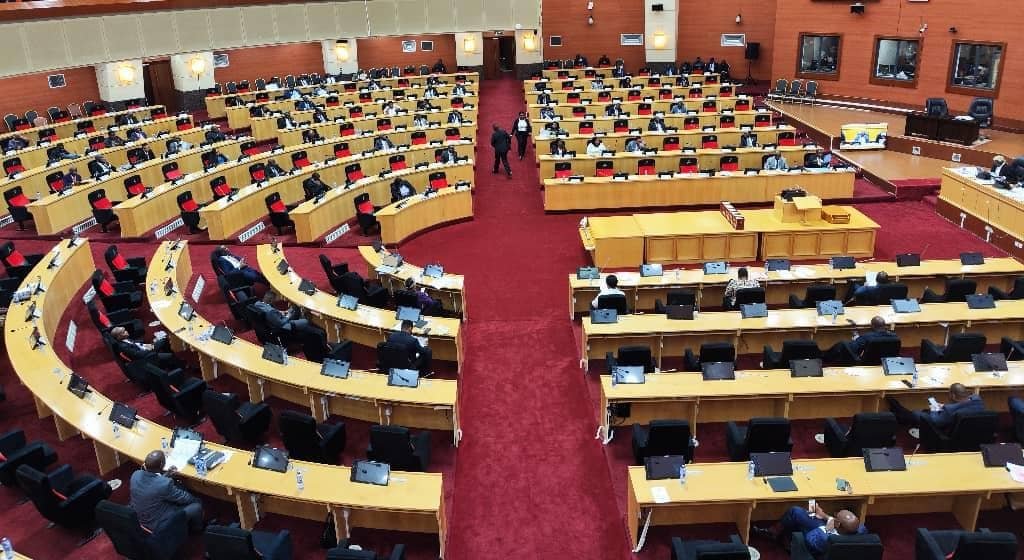
Proposals to review the Political Parties Act to address implementation weaknesses and inconsistencies yesterday split Parliament with the government side faulting the route taken for the proposed amendment. The Political Parties Act of 2018, among others, bans politicians from giving handouts during election campaigns to influence voters. However, the law failed its first test during the September 16 2025 General Election due to perceived legal ambiguities with duty-bearers pushing the responsibility to one another.
In Parliament yesterday, Lilongwe Chiwamba legislator Winston Kaimanjira (Malawi Congress Party- MCP) moved a private member’s motion to review Section 41 of the Act that restricts the provision of handouts during election periods. He said: “One key principle of good legislation is clarity. The provision in its current form creates confusion because it lists exemptions without clearly defining their limits.
For instance, the exemptions on transportation of people and goods as well as entertainment are not well defined in as far as what constitutes a handout.” During debate, some legislators supported the motion, saying the law required refinement to address grey areas, while others argued that the concerns could be resolved through subsidiary legislation rather than amending the principal Act. He said the law was necessary to ensure that candidates with limited financial resources but with the ability to lead could compete on an equal footing. “What has changed now for the same House that passed this law to consider discussing proposals to have it amended today?
[paywall]
If members have hidden money so they can use it in 2030 to buy votes, let them use it now and deliver development so the people can vote for them,” said Mkandawire. However, in an interview after Parliament adjourned, Government Chief Whip Patricia Wiskes clarified that the government supported the objective of addressing challenges surrounding the law, but opposed the mechanism proposed in the motion. “We are not against the motion in itself.
We are not against the objective. What we are against is the mechanism that the private member’s motion is using in order to correct the concerns that have been addressed,” she said. Wiskes said government believed crafting regulations would provide a more appropriate route because regulations offered more flexibility compared to amending the Act.
“Our rejection of the motion was not meant to ignore concerns raised by legislators, but to ensure that the correct legal process is followed,” she said. Former Legal Af fairs Committee chairperson Peter Dimba, who is Lilongwe South MP (MCP), said controversy surrounding Section 41 had existed since the law was passed in 2018. He said lawmakers had expected regulations to provide clarity, but the regulations developed in 2023 were not presented to Parliament for scrutiny and approval.
[/paywall]
All Zim News – Bringing you the latest news and updates.
