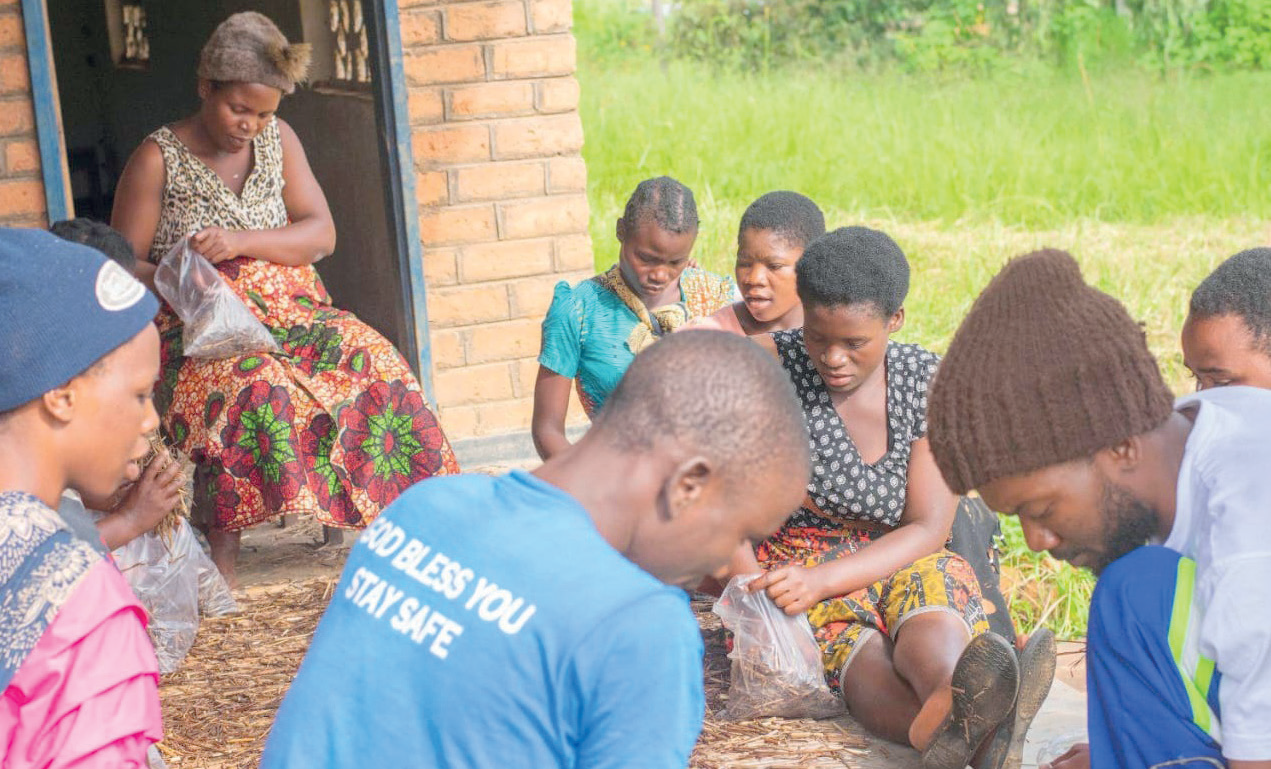
Step into the incubation room and the world melts into darkness. In this pitch-black environment, no light, air or water is permitted. For young Malawians turning to mushroom farming to beat the country’s crippling youth unemployment, it is precisely where economic growth begins.
The “dark stage” marks a critical phase where sterilised bags packed with substrate and mushroom spores sit in total isolation. Unlike field crops, mushroom growing depends entirely on clinical sanitation, as a single microscopic contaminant can obliterate an entire harvest. Despite the razor-thin margins for error, this high-stakes agribusiness is fast becoming a preferred enterprise for young Malawians as the domestic market remains heavily underserved.
Malawi requires up to 50 tonnes of mushrooms a week, but shelves remain undersupplied because smallholder farmers view the strict biological discipline, called mycology—as too demanding. Now, some young, jobless graduates are transforming this niche agricultural science into a highly profitable economic lifeline. John Njoka aptly personifies the journey from academic frustration to agribusiness success.
[paywall]
In 2018, he discovered the hard way that academic papers no longer guarantee employment. “Every single job application I sent out brought back nothing but disappointment. Anyone who has looked for work in Malawi knows how crushing that cycle is,” says Njoka.
However, he refused to let his horticultural expertise go to waste. After earning K80 000 from constructing a greenhouse in Blantyre, he built a rudimentary mushroom house in Njewa, on the outskirts of Lilongwe, which birthed Nirvana Mushroom Company, which makes him one of the country’s leading youth agropreneurs. Njoka was selected to train 30 young farmers in Lilongwe under the Youth Action for Green Agro-Enterprise (Yaga) project.
[/paywall]
All Zim News – Bringing you the latest news and updates.
