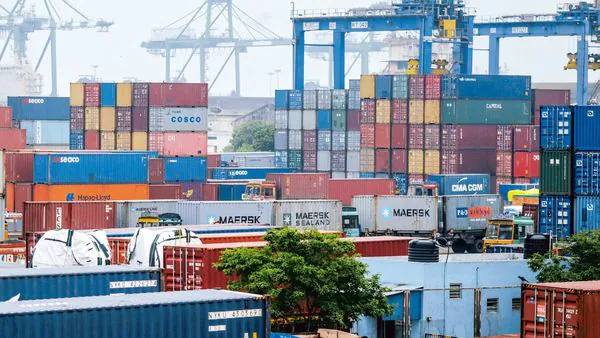
Ministry of Industrialisation, Business, Trade and Tourism has decried weak production capacity for crippling the country’s ability to exploit an estimated $328 million (about K574 billion) in unrealised export potential. Published data from the International Trade Centre (ITC) show that high-potential products are among the country’s biggest missed export opportunities with major untapped export markets in India, Zimbabwe, Rwanda, US and South Africa. In a written response yesterday, the ministry’s spokesperson Patrick Botha said Malawi’s major challenge has been on the production side despite securing markets for commodities such as soya beans.
He said: “You may recall two years ago we had a restriction on raw soya exports because the crop estimate had indicated that our production would be inadequate even to meet the local demand by the productive sector such as cooking oil producers. “As government, we are intensifying engagement with the private sector and all relevant stakeholders to seize the opportunity offered by the various protocols and actually meet the standards and volumes as required by the respective markets.” Botha said Malawi has already passed sanitary and phytosanitary requirements for most target markets and remains committed to building an export-led economy through diversification and value addition. ITC data show that products of high potential include oilcake of soya bean oil whose market is valued at $72 million (about K126 billion), legumes at $56 million (about 98 billion), cane raw sugar $45 million (about K79 billion), soya beans at $21 million (about K37 billion) and groundnuts at $20 million (about K35 billion).
In a separate interview yesterday, Centre for Agricultural Research and Development director Innocent Pangapanga-Phiri observed that aside from production capacity, over reliance on rain-fed agriculture, weak export development strategy and market intelligence, lack of a structured market, policy changes and low investments in technology have affected Malawi’s export potential. “Farmers across Malawi are finding difficulties to aggregate produce and with the increase in fuel prices, it has also become expensive for the farmer to take their produce to the markets,” he said. Malawi launched the five-year National Export Strategy II in 2021 to achieve export competitiveness, focusing on increasing made in Malawi products in regional markets and ensuring import substitution.
[paywall]
But the country’s cumulative trade deficit last year jumped by 20 percent to $2.4 billion (about K4.2 trillion) compared to $2 billion (about K3.5 trillion) during the same period in 2024, according to the Reserve Bank of Malawi data. During the review period, imports were recorded at $3.27 billion (about K5.7 trillion) while exports closed the year at $875.4 million (about K1.5 trillion). Some of the major unrealised export markets include South Africa at $7.4 million (about K13 billion), USA at $15 million (about K26 billion), India at $56 million (about K98 billion), Zimbabwe at $34 million (about K60 billion) and Rwanda at $21 million (about K37 billion), according to the ITC.
[/paywall]
All Zim News – Bringing you the latest news and updates.
