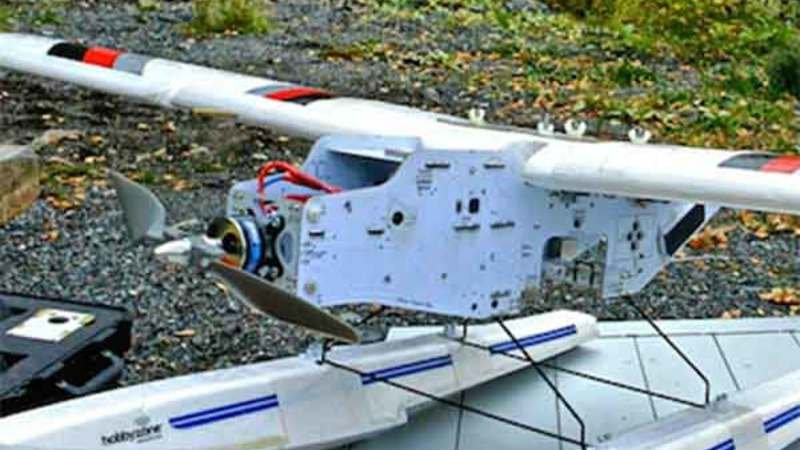
The rapid emergence of drones or unmanned aerial vehicles (UAVs), is poised to dramatically alter the nature of warfare across Africa. Their use raises critical legal, accountability, psychological and ethical concerns. Existing rules of war—including International Humanitarian Law, International Human Rights Law and the law governing interstate conflict,jus ad bellum—are primarily regulated by the UN Charter.
The widespread deployment of drones in Africa will complicate future conflicts, encourage stalemates and amplify the disruptive power of both state and nonstate actors. Drones could lead to increased casualties, property destruction and mass displacement. These changes carry significant consequences for defense strategies, collective security and the prospects for lasting peace.
Africa cannot maintain peace without a unified approach and respect for international law to regulate drone warfare. Africa has witnessed—and in some areas continues to witness—three main forms of traditional warfare. First, internecine conflicts involve factions within a country, often split along tribal or political lines, fighting each other.
Read Full Article on Mail & Guardian
[paywall]
These internal struggles stem from deep grievances or contests for power. Second, government forces engage nonstate actors like insurgents, militias or terrorist groups. Third,interstate wars, usually triggered by border disagreements or competition for resources, remain a threat even if less frequent.
Beyond these, cyber security challenges are also increasingly relevant. In all these conflicts, access to drones—their numbers and the technical skills needed to deploy them—will increasingly determine military outcomes. Drones expand lethal capabilities far beyond conventional air power or long-range missiles.
Their affordable cost puts them within reach of state and nonstate actors alike, potentially shifting the balance of power in unpredictable ways. As lethal weapons, drone use in war must comply withinternational laws. Yet, modern technologies challenge established legal frameworks.
Artificial Intelligence and the Internet of Things (IoT) are prime examples, and drones are close behind. Africa needs consensus on how the laws of war apply to these new tools to avoid legal, accountability, ethical, and psychological dilemmas. Robust controls and enforcement mechanisms are essential.
Drones may undermine state sovereignty and the monopoly on legitimate force, particularly if acquired by nonstate or internal actors. Drones could also intensify the destruction in wars—the ongoing conflict between the Rapid Support Forces and the Sudanese government is a case in point. Their range, precision and lethality enable remote warfare, causing devastation at minimal cost to the attacker but severe harm to victims.
This shift increases two asymmetries: the capacity to inflict violence and a tendency toward indiscriminate suffering. Drones pose new challenges for the right to life and related legal principles. Even with existing laws, Africa must develop new consensus to address these technological advances.
The spread of drones may make conflicts unwinnable, preventing any side from achieving decisive victory. Combatants can inflict destruction without capturing territory, leading to prolonged stalemates. In interstate wars, drones may deter escalation; in internal conflicts, they could prolong violence, devastation and civilian suffering.
Drones may empower groups focused on damaging state assets and populations to pressure governments. Wars are exceptions in international law, meant to be time-limited and proportional. Remotely delivered force, if not strictly controlled, risks making war a regular occurrence.
[/paywall]
All Zim News – Bringing you the latest news and updates.
