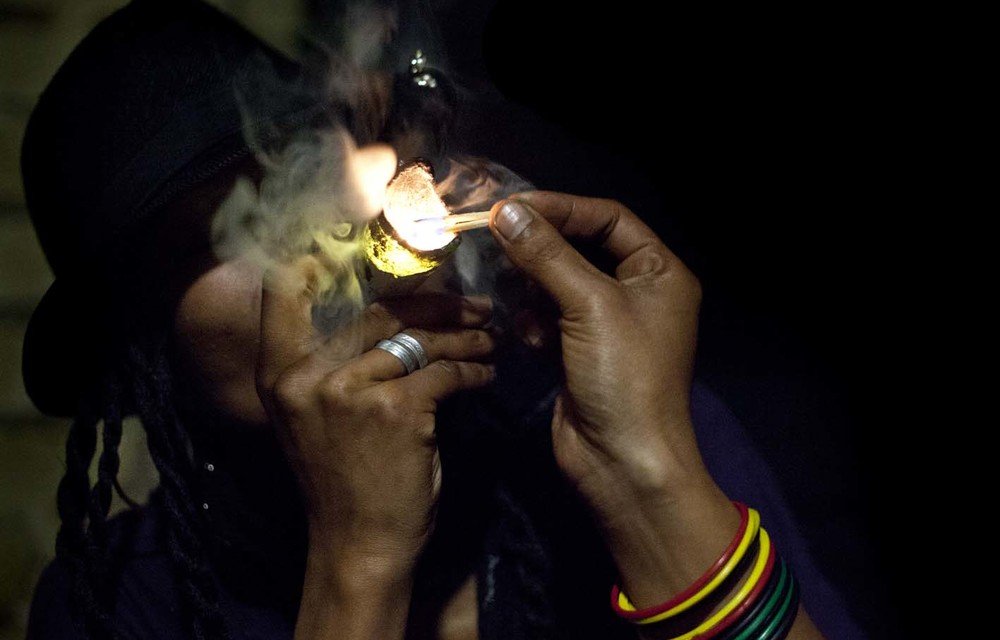
It’s still early when Bridget Munnik walks to work. The streets of Westbury in Johannesburg are eerily quiet. “If it’s daylight, then it’s their time to sleep.
For us it’s day and for them it’s night.” When the darkness falls, drug users come out to roam the neighbourhood in the west of Johannesburg, she says. “They’re running around like mad people in the community.” Auntie Brie, as she’s known by those who come to the skills development programme she runs in the neighbourhood, grew up watching illicit drugs shape her community. Her brothers used dagga andMandrax, a depressant with sedative and hypnotic effects, which, she says, at least kept her siblings calm.
But today’smethamphetamines, known as tik or crystal meth, are different. These are stimulants that are snorted, smoked or injected and are known for causing violent and bizarre behaviour. When her sons struggled with drugs, she saw them transform.
Read Full Article on Mail & Guardian
[paywall]
“I didn’t know they were on drugs. And then I saw the monsters, where they became very aggressive, very, very aggressive.” It’s a cycle that hastrapped generations. Arrests and heavy-handed police crackdowns have done little to break it and drugs continue to flood the community.
Today, Westbury is known as one of the city’s deadliest areas, plagued by gangs, violence, unemployment and poverty. Part of what’s fuelling the addiction crises there and across the country, say experts whoBhekisisaspoke to for its monthly TV programmeHealth Beat, is that our conflicting approaches to drugs are undermining each other. Seven years ago, the country launched a revisedNational Drug Master Plan.
It recognises addiction as a chronic disease affecting the brain and behaviour and that approaches to treating it should include what’s known asharm reduction. Harm reduction is not about expecting drug users to just quit using the substances they’re dependent on; it’s about trying to make sure that they don’t overdose or don’t pass viruses like HIV to other drug users. But in practice, police follow theDrugs and Drug Trafficking Act of 1992, which says drug use is criminal.
“The tragedy of Westbury and other parts of western Johannesburg is the same as the tragedy we see playing out in gang areas in the Western Cape and the Eastern Cape,”Julian Rademeyer, the former director of the Global Initiative Against Transnational Organised Crime’s East and Southern Africa research observatory, toldHealth Beat. “There’s a cycle of abuse, a cycle of violence that has been continuing for decades.” He says police focus their efforts on easy targets, including drug mules caught at borders or at points of entry into the country. But Rademeyer, who has reported extensively on organised crime, argues the strategy is doomed to fail.
[/paywall]
All Zim News – Bringing you the latest news and updates.
