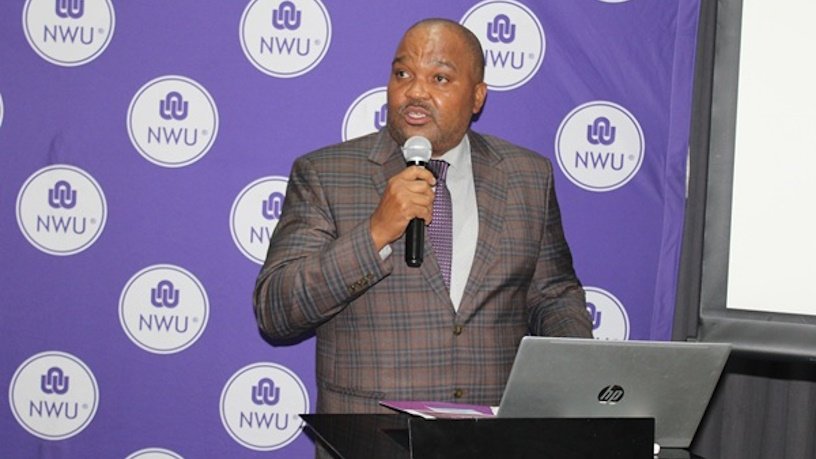
The nuclear sector remains an important economic growth driver that can support job creation, skills development and industrial expansion in South Africa, according to North-West University (NWU) principal and vice-chancellor Prof Mzubanzi Bismark Tyobeka. Speaking at the NWU Nuclear Alumni Engagement held on 19 March 2026 in Sandton, Prof Tyobeka said nuclear development should be viewed as part of the country’s broader economic strategy as the sector contributes to electricity generation, research, manufacturing and specialised training. An internationally recognised expert on nuclear energy, Prof Tyobeka said global energy demand and the need for stable power supply continue to place nuclear energy at the centre of long-term planning in many countries.
More than 440 nuclear reactors operate worldwide, producing close to 9% of global electricity and supplying a significant share of low-carbon power. Within this context, he said the economic role of the sector is clear. “The nuclear sector is also a powerful economic driver,” Prof Tyobeka said, adding that industry projections show that an expanded nuclear programme in South Africa could create more than 16 000 skilled jobs and contribute over R53 billion to the national gross domestic product.
He said the economic impact of nuclear development extends beyond electricity production because the sector supports a range of specialised industries that require technical knowledge and research capacity. According to Prof Tyobeka, nuclear science contributes to work in materials engineering, medical isotope production, radiation technologies, industrial diagnostics and advanced physics research, all of which support industrial growth and technological capability. He said countries with nuclear capability often develop stronger scientific and technical systems, which in turn support manufacturing, innovation and high-skill employment.
Read Full Article on Mail & Guardian
[paywall]
“In many respects, nuclear capability functions as a strategic national asset, shaping a country’s position within the global scientific and technological landscape,” he said. Prof Tyobeka said universities have a responsibility to sustain the sector by training scientists, engineers and specialists who can work across the nuclear value chain. He noted that the profession requires scientific training, engineering precision, regulatory knowledge and strict safety standards, which can only be developed through long-term education and mentorship.
[/paywall]
All Zim News – Bringing you the latest news and updates.
