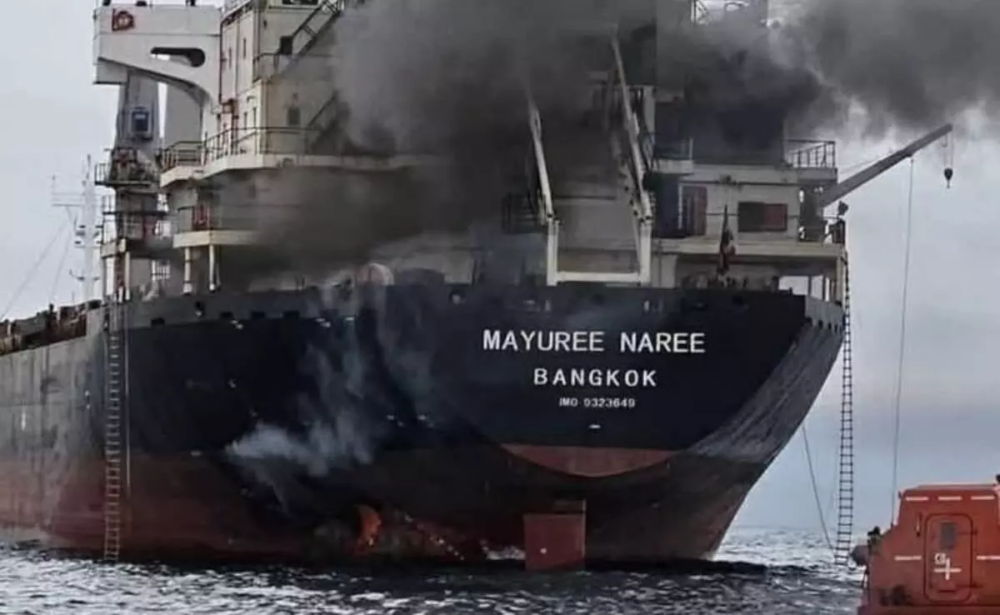
While there have been long-standing conflicts in the Middle East, the US-Israel attack on Iran has disrupted oil trade and petrol prices on an unprecedented scale, putting into question the future of the global economy and the legitimacy of religion-based wars. A month into the conflict, Iran has closed the vital Strait of Hormuz, which transports 20% of global oil supply, raisingoil prices to $115 a barreland plans to push them up to $200 a barrel as a wartime fight back strategy. In response to the 28 February attack, Iran targeted US military bases and assets in the neighbouring Gulf countries, such as Saudi Arabia, the United Arab Emirates, Oman and Qatar, while limiting oil tanker access through the Strait of Hormuz to countries that canpay with the Chinese Yuan, raising questions about the impact on the US dollar Swift system.
The killing of Iran’s supreme religious leader, Ayatollah Ali Khamenei, at the start of the war and during the month of Ramadan has spurred officials to describe the conflict in religious terms. Motjaba Khamenei, the newly-installed Ayatollah, described the war as precipitating the return of the “12th Hidden Imam”, in accordance with Iran’s Twelver Shia Islam. Analysts say Middle East conflicts are often driven by eschatological reasons, where religion and history are closely linked.
Israel’s objectives are seen as attempts to create a Greater Israel Project, which covers the “promised land” between the Nile River in Egypt and the Euphrates River, encompassing modern-day Lebanon, Syria, Turkey and Iraq. Israel’s Prime Minister Benjamin Netanyahurecently describedthe country’s objectives as a defence and deterrence against the “Amalek” — a biblical reference to the Amalekites, who attacked the Israelites in their Exodus from Egypt. Netanyahu previously used the same moniker to describe the Palestinians in Gaza, a critical point which South African lawyers highlighted in their genocide case against Israel at the International Courtof Justice.
Read Full Article on Mail & Guardian
[paywall]
“On 28 October 2023, as Israeli forces prepared their land invasion of Gaza, the prime minister invoked the Biblical story of the total destruction of Amalek by the Israelites, stating: ‘You must remember what Amalek has done to you, says our Holy Bible. And we do remember.’ “The prime minister referred again to Amalek in the letter sent on 3 November 2023 to Israeli soldiers and officers. The relevant biblical passage reads as follows: ‘Now go, attack Amalek and proscribe all that belongs to him.
Spare no one but kill alike men and women, infants and sucklings, oxen and sheep, camels and asses,’” state South Africa’s ICJ court papers. In their genocide case, South African lawyers highlighted how Israeli parliamentarians “publicly deplored anyone ‘feel(ing) sorry’ for the ‘uninvolved’ Gazans, asserting repeatedly that ‘there are no uninvolved’.”
[/paywall]
All Zim News – Bringing you the latest news and updates.
